Training a dog is less about control and more about communication. Your dog is always learning something from what happens around them, and training simply means choosing what they learn on purpose. This guide walks through what to teach first, how to run a session, and what a realistic first month looks like for a beginner.
Key takeaways
- Short beats long: two or three five-minute sessions a day work better than one long one.
- Reward the moment: mark the exact second your dog gets it right, then pay.
- Start easy: teach in a quiet room first, and only add distractions once the cue is solid.
- Be consistent: everyone in the house should use the same word for the same behavior.
What dog training actually teaches
Every cue you teach is a small agreement. You say a word, your dog does a behavior, and something good follows. Over enough repetitions the word itself becomes a reliable signal. Nothing about that requires dominance, harshness or a special personality. It requires clear information and good timing, and reward-based methods are what veterinary behavior organizations recommend for all dog training (AVSAB position statement on humane dog training).
Most owners want the same handful of outcomes: a dog who comes back, walks without dragging them down the street, settles when visitors arrive and can be handled by a vet without a struggle. Those four things cover most of daily life, and all of them are built from the same basic skills.
Five things to get right before you start
1. Timing
Dogs connect a reward with whatever they were doing in roughly the previous second. If you fumble for a treat and deliver it four seconds late, you may be rewarding something else entirely. Use a marker: a short word such as “yes” or a clicker, said the instant the behavior happens, then follow with the treat.
2. Reward value
Kibble is fine in the kitchen. It rarely competes with a squirrel. Keep a range of rewards and match the value to the difficulty: everyday food for easy repetitions at home, something far better for hard work outdoors.
3. Environment
New behaviors are fragile. Teach them in the most boring room in your house, then repeat in the hallway, then the yard, then the quiet end of the street. Each new place is effectively a new lesson for your dog, even when the cue is the same.
4. Session length
Five minutes is plenty. Finish while your dog still wants more rather than when they have lost interest. Several short sessions spread across the day beat one long one, and they fit real life better too.
5. One cue at a time
Pick one thing to work on for a week. Splitting your attention across six cues usually means none of them get solid. You can still practice finished cues in the background while you build the new one.
The first five things to teach
Name recognition
Say your dog’s name once. The moment they look at you, mark and reward. That is the whole exercise. A name should mean “look at me, something good is coming”, not “you are in trouble”.
Hand target
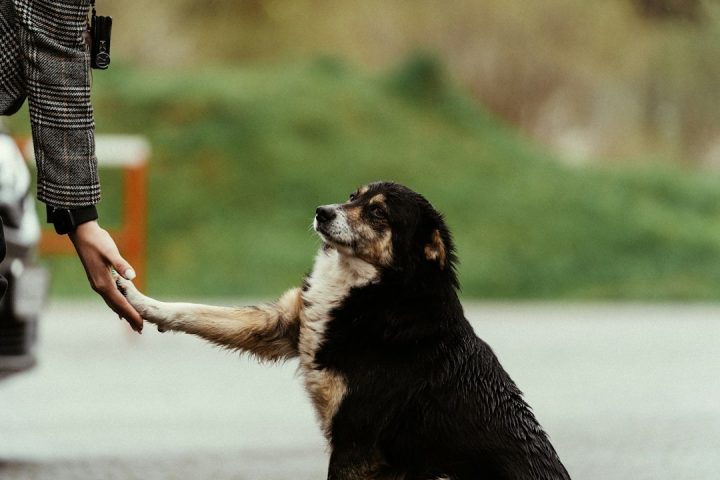
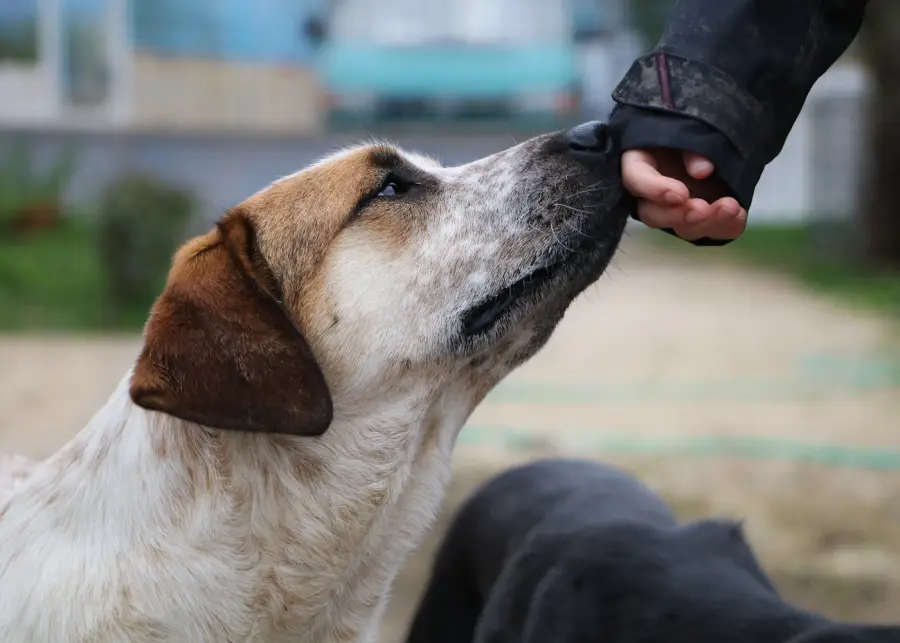
Hold a flat palm a few inches from your dog’s nose. Most dogs sniff it. Mark that touch and reward. A hand target is the most useful cue on this list because it moves your dog without pulling: out of a car, off the sofa, past a distraction.
Sit
Wait for your dog to sit on their own, mark and reward. Repeat a dozen times and they will start offering it. Only add the word “sit” once the behavior is happening reliably, otherwise you are attaching a word to a guess.

Settle
Reward your dog for lying quietly on a mat or bed while you do something ordinary nearby. This is the cue most owners wish they had taught first, because it covers mealtimes, visitors and working from home.
Recall
Coming when called is the one cue that can keep a dog safe, and it deserves its own practice plan. Our guide to obedience training covers how to build it properly and, just as importantly, how to avoid wrecking it.
A realistic first month
This is a rough shape rather than a rule. Adjust it to your dog’s age, energy and attention span.
| Week | Focus | What good looks like |
|---|---|---|
| Week 1 | Name, hand target, marker word | Your dog looks up at their name indoors, nine times out of ten |
| Week 2 | Sit, settle on a mat | Sit on cue indoors, a few minutes of calm on the mat |
| Week 3 | Repeat week 1 and 2 in the yard and hallway | Same cues working in two or three new places |
| Week 4 | Add recall on a long line, start loose-lead walking | Reliable recall at short distance, a few steps without tension |
Common beginner mistakes
- Repeating the cue. Saying “sit, sit, SIT” teaches your dog that the first two are optional. Say it once, wait, and help if nothing happens.
- Training when you are frustrated. Dogs read tone and body language well. If a session is going badly, ask for something easy, reward it and stop.
- Skipping the easy stage. Most “my dog won’t listen outside” problems are really “we never practiced outside”.
- Using the name as a warning. If the name predicts something unpleasant, dogs stop responding to it.
- Inconsistent house rules. If one person allows the sofa and another does not, your dog is not being stubborn, they are being sensible.
The gear that actually helps
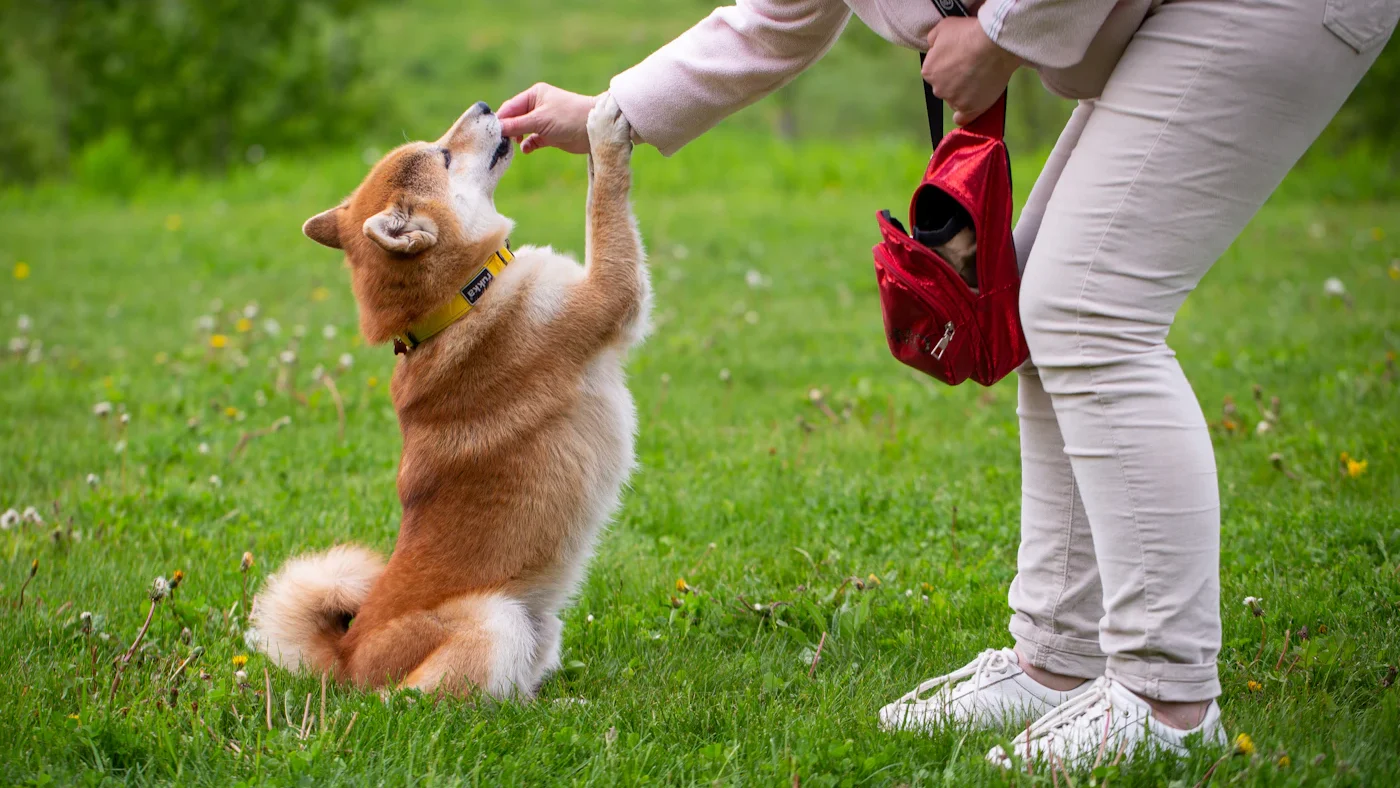
You need very little to start, and most of it is cheap. A flat collar with an identification tag, a fixed-length lead of about six feet, a treat pouch so rewards are reachable, and food cut small enough that your dog can swallow it in a second. That is the whole list for indoor work.
Two things are worth thinking about before you spend anything else. A front-clip harness makes lead work easier while a dog is still learning, and a long line of fifteen to thirty feet gives you a safe way to practice recall outdoors before you trust it off lead. Our guide to harnesses and collars covers how to size and fit both.
Retractable leads are popular and awkward for training, because they teach a dog that pulling extends the lead. If you own one, save it for open space rather than the pavement work in this guide.
Reading your dog during a session
Dogs tell you when a session has stopped working, usually before they stop responding. Sniffing the ground, turning away, yawning, scratching or suddenly wandering off often mean the exercise has become too hard, too long or too repetitive. None of those are defiance.
The fix is almost always the same: make the next repetition easier, reward it, and end there. Finishing on something your dog can do keeps the next session easier to start. If a dog seems stiff, reluctant to sit, or has changed how they move, stop training and speak to your vet.
Where structured programs fit
Plenty of owners do fine with free material and patience. Others want a sequence laid out for them, with video and a clear order. Structured courses and in-person classes both work, and the right choice usually comes down to whether your dog needs practice around other dogs or practice around you. Our overview of online dog training programs explains what to ask before paying for any of them.
When to bring in a professional
Some things are not beginner territory. Growling, snapping, guarding food or people, panic when left alone, or a sudden change in behavior all deserve qualified eyes. Ruling out pain or illness first matters, because medical problems can drive behavior that looks like a training issue (Merck Veterinary Manual). Start with your veterinarian, then look for a credentialed trainer or behaviorist. Our guides to dog behavior and aggression explain what to look for and when to stop working on it alone.
Frequently asked questions
How long does it take to train a dog?
Basic cues usually take a few weeks of short daily sessions, but reliability in busy places takes months. Training is a habit rather than a project with an end date.
How old should a puppy be before training starts?
You can start teaching a name, a hand target and gentle handling as soon as a puppy comes home. Keep sessions very short and reward often.
Do I need treats forever?
No. Treats are heaviest while a dog is learning. Once a cue is solid you reward less predictably and mix in praise, play and real-life rewards such as a door opening.
What if my dog ignores me completely?
That is usually a sign the environment is too distracting or the reward is not worth much. Move somewhere quieter, raise the value of the reward and make the exercise easier.
Is it too late to train an adult dog?
No. Adult dogs often learn faster than puppies because they concentrate for longer. They may need more repetition to replace habits they have practiced for years.
Related reading: positive reinforcement dog training, basic obedience commands, teaching a dog to come when called, stopping a dog from pulling on the leash and choosing the right crate size.
Final thoughts
You do not need a perfect routine to train a dog well. You need a marker word, something your dog wants, a quiet room and five minutes. Build one cue at a time, take it to new places slowly, and let the difficult things wait until the easy things are genuinely easy. For the bigger picture, our dog training hub collects the rest of the guides in order.