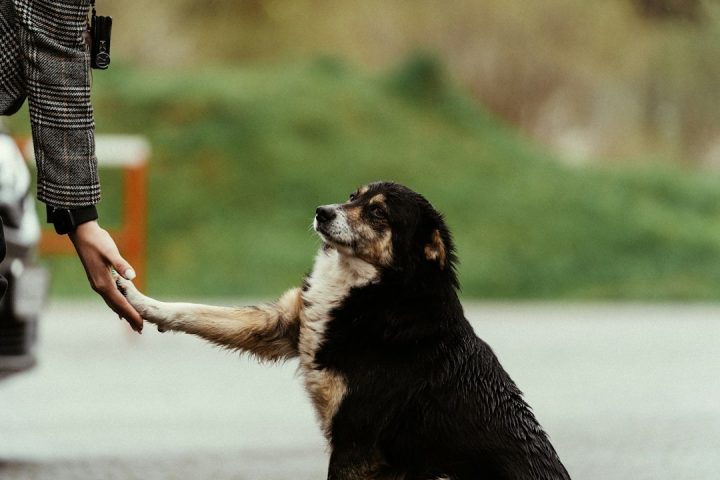
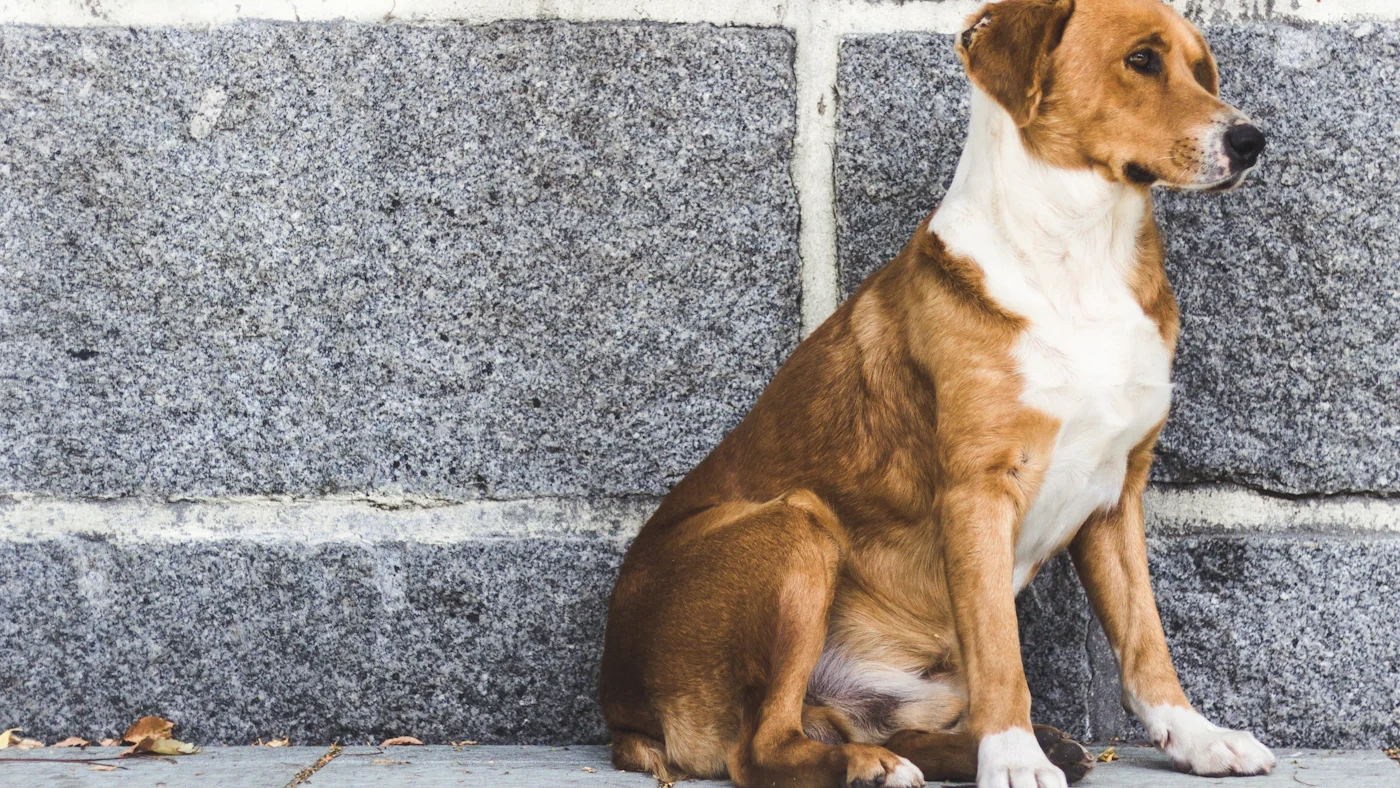
Basic obedience is not about having a dog who performs. It is about having a handful of words that work when they matter: at a road, at the vet, when the front door opens, when something dangerous is on the pavement. Six cues cover almost all of it, and every one of them can be taught in five-minute sessions at home.
Key takeaways
- Six cues cover daily life: name, sit, down, stay, come and leave it.
- Teach the behavior, then name it: adding the word too early attaches it to a guess.
- Five minutes is a full session: short and frequent beats long and occasional.
- Proof deliberately: a cue that works in the kitchen is not yet a cue.
What you need before you start
Very little. Food cut small enough to swallow in a second, a treat pouch so rewards are reachable, a quiet room, and a marker word such as “yes” said the instant your dog gets it right. The marker is what makes the timing possible: you can mark a behavior in the moment and take a second or two to deliver the food.
Reward-based training is the approach veterinary behavior organizations recommend for all dog training (AVSAB, 2021), and AAHA’s behavior guidelines describe the same evidence-led methods (AAHA behavior management guidelines). Nothing in this guide needs a correction, a check chain or a raised voice.
The six cues, in order
1. Name
Say the name once. The moment your dog looks, mark and reward. That is the whole exercise, and it is the foundation for everything else. A name should mean “good things are about to happen”, never “you are in trouble”.
2. Sit
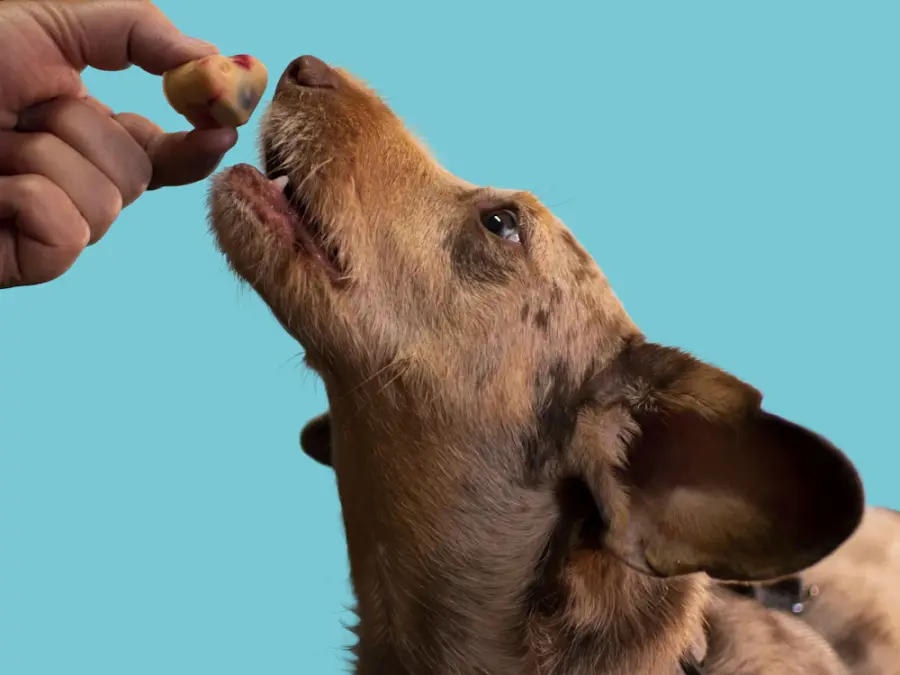
Wait for your dog to sit on their own, mark and reward. After a dozen repetitions they will start offering it. Only then add the word, just before the behavior happens. Luring with food over the nose works too, but fade the lure within a few sessions or the hand becomes the cue.
3. Down
Easiest to capture when your dog is already settling. Mark the moment the elbows touch the floor. If you are luring, bring the food straight down between the front paws rather than pulling it forwards.
4. Stay
Build the three parts separately: duration, distance and distraction, and only ever one at a time. Start with two seconds at arm’s length. When you add distance, drop the duration back down. Return to your dog to reward rather than calling them out of it, otherwise stay becomes a waiting game.
5. Come
Recall deserves its own practice and its own rules, because it is the cue most easily ruined. Never call your dog to something they dislike, never punish a dog who came slowly, and pay well every time while you are building it. Our guide to training a dog to come when called covers the full method.
6. Leave it
Start with a boring item in a closed hand. The moment your dog stops trying to get it, mark and pay from the other hand, so turning away is always more profitable than persisting. Build up to items on the floor, then to things on a walk. This is the cue that stops a dog eating something they should not.
Roughly how long each takes
| Cue | Reliable indoors | Reliable outdoors |
|---|---|---|
| Name | A few days | One to two weeks |
| Sit | A few days | One to two weeks |
| Down | One week | Two to three weeks |
| Stay | Two weeks for short durations | Months, and it keeps developing |
| Come | One to two weeks at short distance | Months, with a long line |
| Leave it | One week with a hand | Months with real distractions |
These are rough shapes, not promises. Age, history and how much practice happens in a normal week all change them.
Proofing: making cues work outside
A behavior learned in one room is tied to that room. To make a cue portable, change one thing at a time and lower the difficulty everywhere else. Move to the hallway but shorten the duration. Go to the yard but stand closer. Practice on a quiet street before a busy one. When a cue falls apart, it is almost always because two things got harder at once.
A four-week schedule
| Week | New | Maintained |
|---|---|---|
| 1 | Name and marker word | |
| 2 | Sit and down | Name in two new rooms |
| 3 | Stay, short durations | Sit and down in the yard |
| 4 | Leave it, and recall on a long line | Everything, one step easier outdoors |
Hand signals are worth adding
Dogs read body language more fluently than speech, and most pick up a hand signal faster than a spoken word. It is worth teaching both from the start: give the hand signal, then the word, then reward. Later you can use either.
The practical payoff comes later than you expect. A dog who knows a visual cue can still be asked to sit across a noisy park, or in a vet waiting room where you would rather not raise your voice, and a dog who loses their hearing with age keeps a working vocabulary. Ten seconds per repetition now saves a lot of adaptation later.
When a cue stops working
Every owner hits this. A cue that was solid last week produces a blank stare today. Work through it in this order rather than repeating yourself louder.
- Is something hurting? A dog who suddenly will not sit or lie down may be telling you about a joint, not ignoring you.
- Is the environment harder? New place, new smells, another dog nearby. Drop the difficulty and try again.
- Has the reward gone stale? Kibble stops competing outdoors. Raise the value for hard repetitions.
- Did the cue drift? Family members using different words, or the same word for two different things, is a common cause.
- Has it been paid recently? Cues that are never rewarded quietly fade over months.
If none of those explain it, make the exercise easy enough that your dog succeeds, reward that, and end the session. Getting back to a win is more useful than winning the argument.
Common mistakes
- Repeating the cue. Saying it three times teaches your dog that the first two do not count.
- Naming the behavior too early. Attach the word once the behavior is reliable, not while your dog is still guessing.
- Rewarding late. Anything more than a second or two after the behavior is rewarding something else.
- Training when your dog is wound up. Arousal and learning do not sit well together.
- Skipping proofing. Most “he ignores me outside” problems are really “we only ever practiced inside”.
Puppies, and starting early
If you have a puppy, start now rather than waiting for vaccinations to finish. AVSAB’s position is that the first three months are the critical window for exposure to new people, animals and places, and that behavior problems, not infectious disease, are the greater risk to young dogs (AVSAB position statement on puppy socialization). Keep sessions very short, reward often, and pair training with the socialization your puppy needs anyway. Our puppy training guide covers the first-year specifics.
K9 Training Institute
Video-led obedience training aimed at everyday problems.
Link coming soonDunbar Academy
Courses from a long-established veterinary behaviorist and trainer.
Link coming soonCanine Principles
Courses for owners who want the theory behind the training.
Link coming soonWe link to programs so you can check current details yourself. We do not publish prices or course contents, because those change.
Frequently asked questions
What are the basic obedience commands?
Most owners need six: name, sit, down, stay, come and leave it. Between them they cover doors, vets, visitors, roads and anything your dog should not pick up.
How long should a training session be?
Five minutes. Two or three short sessions a day beat one long one, and finishing while your dog still wants more keeps the next session easy to start.
In what order should I teach them?
Name first, because everything else depends on attention. Then sit, because it is easy to capture. Stay and leave it come later, since both need impulse control.
At what age can a puppy start?
As soon as they are home. AVSAB advises that early socialization and learning should start well before vaccinations are complete, because behavior problems are the bigger risk to young dogs.
My dog knows it at home but not outside. Why?
A cue learned in one place does not transfer automatically. Each new environment is effectively a new lesson, which is why proofing is a stage rather than an afterthought.
The same cues help at doorways: teaching a reward-based wait at the door is covered in our guide on how to stop a dog from running out the door.
Related reading: positive reinforcement dog training, choosing the right crate size and stopping a dog from pulling on the leash.
Final thoughts
Six cues, five minutes at a time, one new thing per session. That is the entire method, and it works as well for a seven-year-old rescue as for an eight-week-old puppy. When a cue stops working, make it easier rather than louder. Our obedience training hub collects the rest, and the beginner guide to training a dog is the place to start if this is your first dog.