If you are wondering how to stop a dog from running out the door, combine two things: management that physically blocks the escape right now, and training that teaches your dog to wait at the threshold until you release them. Management keeps your dog safe while training takes hold, and a reliable recall is the backup if your dog ever gets past you.
Bolting is rarely stubbornness. A door is an exit to smells, people, other dogs and a good run, and many dogs have simply never been taught that doorways have rules. Below you will find why it happens, a safe setup, a step-by-step wait plan, an emergency recall plan and what to do if your dog gets out anyway.
Key takeaways
- Manage first: use a leash, gate or closed door so your dog cannot practice bolting while you train.
- Teach “wait”: the dog pauses at the door until you give a release word. It is not the same as “stay.”
- Start indoors: practice at an inside door before you try the front door, and leash your dog for doors that lead outside.
- Back it up with recall: dogs do not automatically carry skills from one place to another, so practice coming when called in harder settings.
- Use reward-based methods: never punish a dog for coming back to you.
Why Dogs Run Out the Door
Veterinary behavior and training sources point to a few overlapping reasons. Vetstreet’s trainer Mikkel Becker notes that many dogs treat a door as an escape hatch rather than a boundary, and that bolting is dangerous because a dog can be injured, get lost or be stolen (Vetstreet).
- Built-in rewards: outside offers people, animals, smells and the pleasure of a run, which reinforces escaping.
- Breed and personality: Becker says dogs bred to work independently at a distance, such as many terriers and hunting breeds, and scent hounds and sighthounds that follow smells or sights, are often more likely to bolt.
- Hormones: testosterone in intact male dogs can be a factor, though not every dog who bolts is an intact male.
- The chase game: some dogs dash out because being pursued is fun.
- No training yet: the American Veterinary Society of Animal Behavior (AVSAB) says dogs who ignore calls in exciting situations are not being intentionally disobedient. They have not been taught to respond there, or the rewards outside outcompete yours (AVSAB).
Step 1: Make the Door Safe Right Now
Training takes time, so block the escape route in the meantime. The American Kennel Club (AKC) notes that a dog who rushes through a door risks running away or being hit by a car (AKC). Practical options from the sources:
- Keep a leash by the door and clip it on before the door opens. Becker suggests hooks or a drawer near the door so attaching a leash becomes routine.
- Use a dragline: Becker describes a slick, grab-able line clipped to a harness (not a collar) during times the door is likely to open.
- Add a baby gate across the hall to block access to the front door. AVSAB and the AKC both mention gates, though Becker warns that some dogs will vault them.
- Prepare the household: ask family members and visitors to wait for you to secure the dog before opening the door.
Safety note: management is a safety net, not a cure. It prevents the dog from rehearsing the escape while you build the skills below.
Step 2: Teach “Wait” at the Door
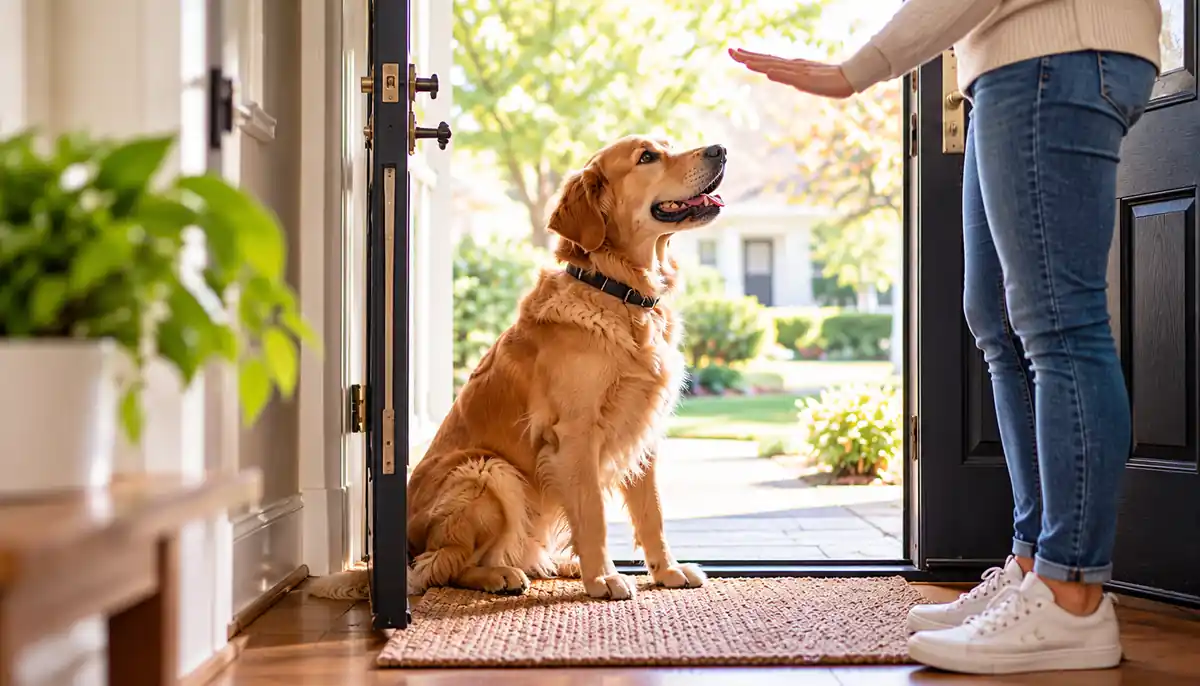
The AKC recommends teaching a “wait” so your dog pauses at a doorway until permission is given. Wait differs from stay, so it helps to train them with separate cues.
| Cue | What it means | Notes |
|---|---|---|
| Wait | Hold on a moment | The dog may sit, stand or move around, but should not go through the door. |
| Stay | Hold this exact position until released | Harder to maintain for long periods. |
| Release word | You may go through | Not every wait ends in a release. Sometimes the door simply closes again. |
Based on AKC guidance. Train at an inside door first so the dog is not at risk if they get past you, use a door that opens toward you, and make sure nothing exciting is happening on the other side.
- Open a crack. When your dog is settled, open the door slightly. If they move toward it, close it again.
- Mark the pause. When your dog stands still, looks away, backs up or sits, say a marker word such as “Yes,” then praise and give a treat.
- Open a little more. Increase the gap gradually, closing the door whenever your dog moves toward it, and reward when they hold back.
- Add the cue. Once you can open the door fully without your dog moving through, say “wait” before you open it. A hand signal such as an open palm in front of the nose is optional.
- Add your own movement. Step into the doorway, then return and reward. Build up until you can pass through the doorway.
- Add a release word. On some repetitions say “Okay” or “Free” and let your dog through. Make this a real reward, such as a game or a tossed toy.
- Change the door. Move to the crate door, car door and eventually outside doors. Each new door is a new challenge, so take a few steps back in the process, and leash your dog for doors that lead outside.
If your dog slips through anyway, the AKC suggests leading them back to the starting side and repeating the cue, being quicker to catch the next attempt. If your dog struggles to settle, you can ask for a sit first, but fade that cue so the open door itself becomes the signal to hold back.
Step 3: Add a Station Away From the Door
Becker also recommends mat training: teach your dog to go to a mat, bed or crate, then practice opening the door while they stay there. Over time the mat can move farther from the door, so you could shut the door before a dog who broke position reached it (Vetstreet). This works well for the doorbell moment, when excitement is highest. For the underlying basics, see our guides to teaching basic obedience commands and calming an overexcited dog.
Step 4: Build a Recall Backup
AVSAB describes two tasks for a dog who bolts: teaching them to stay when the door opens, and teaching a reliable response to “come.” Dogs are not good at generalizing a skill from one setting to another, so a dog who comes perfectly in the living room may ignore you outside. Build the skill gradually, from inside the house to the yard, then to a long trailing leash in varied places. AVSAB’s rules for calling a dog include:
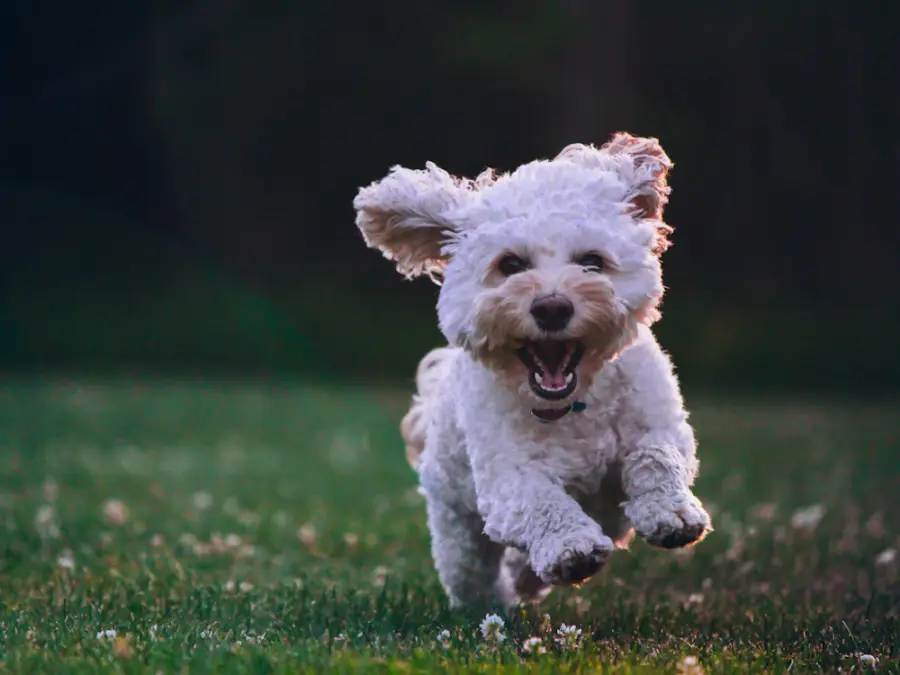
- Use the dog’s name and a clear, upbeat cue, and keep the wording consistent.
- Skip the threatening voice. Dogs may stop responding to a cue that always sounds like trouble.
- Use a high-value reward in early training, such as treats, a toy tug or a thrown ball.
- Never punish a dog when you have to retrieve them, and never call your dog and then do something they dislike. Go and collect them instead.
Our step-by-step guide to training a dog to come when called covers recall in more detail.
What to Do If Your Dog Bolts Anyway
AVSAB’s advice for catching a loose dog in the moment is to avoid chasing, because being pursued often pushes dogs farther away. Instead, try:
- Running excitedly away from your dog while talking happily, as if you are heading off on an adventure.
- Crouching, clapping and looking away while calling cheerfully.
- Shaking a treat bag, or opening a car door if your dog loves rides.
Once your dog is back, reward the return and then work on the plan above so it does not happen again.
Common Mistakes to Avoid
- Relying on training alone: keep gates, leashes or closed doors in place until the behavior is reliable.
- Starting at the front door: begin at an inside door where an escape is not a risk.
- Using “stay” when you mean “wait”: a long, rigid stay is hard for most dogs. Wait is shorter and more flexible.
- Punishing the return: this can teach a dog to avoid you. AVSAB recommends reward-based methods only for all dog training (see its position statements).
- Inconsistency: every person in the home should use the same cues and the same door routine.
Add Identification as a Safety Net
Even a well-trained dog can get out. Becker describes microchips and ID tags as essential, especially for dogs with a history of escaping. The American Veterinary Medical Association (AVMA) endorses microchipping but says it is not a substitute for external ID, so your dog should also wear a collar with proper identification. The chip itself holds only a registration number, so your contact details must be registered and kept current in the database, and the AVMA suggests having the chip scanned at routine preventive exams (AVMA and AVMA’s Check the Chip Day page). For a wider look at a safe home, see our pet safety at home checklist, and browse harnesses and collars and GPS trackers. A tracker may help you locate a dog who gets out, but it does not prevent bolting.
When to Get Professional Help
Consider a certified trainer or a veterinary behavior professional if your dog panics, hurts themselves trying to get out, or tries to escape when left alone, which can point to a different problem. See our guide to dog separation anxiety for the signs to watch for. AVSAB maintains a directory of behavior consultants. A sudden change in behavior is also a good reason to check in with your veterinarian.
Editorial note: this guide summarizes published guidance from the sources listed below. It is general information, not a substitute for advice from a qualified trainer or veterinarian.
Frequently Asked Questions
Why does my dog run out the door whenever it opens?
For many dogs the open door is a gateway to rewards such as smells, people, animals and a run. Breed, personality and, in some intact males, hormones can add to the urge. Without training, the door simply is not a boundary.
Is “wait” the same as “stay”?
No. The AKC explains that stay means holding the exact position until released, while wait means hold on a moment. During a wait your dog can sit, stand or move around as long as they do not go through the door.
Should I chase my dog if they run out?
Generally no. AVSAB notes that being pursued tends to push dogs farther away, so try moving away from your dog in an excited, friendly way or crouching and calling cheerfully.
Will a baby gate solve the problem?
A gate can block access to the front door while you train, but it is not a guarantee. Becker cautions that some dogs will vault over a fence or gate, so pair it with training.
Does a microchip stop my dog from running out?
No. A microchip helps reunite you with a lost dog if your contact information in the registry is current, but it does not prevent escapes. Training and management do that.
Can I train an older dog not to bolt?
Becker says she uses door strategies with dogs from puppies to seniors. Progress depends on the individual dog, so go at their pace and keep management in place.
Related reading: how GPS wireless dog fences work and daily dog exercise ideas.
Final Thoughts
Stopping door dashing is a two-part job: make the doorway safe today and teach your dog that waiting at the threshold pays off. Start at an inside door, reward calm pauses, add a release word and practice your recall. For more help, browse our dog training hub and our guide to positive reinforcement dog training.
Sources
- American Kennel Club: How to Teach Your Dog to Wait at Doorways
- Vetstreet: Can I Teach My Dog Not to Dash Out the Door? (Mikkel Becker)
- AVSAB: The Case of the Runaway Dog Part 1 (Dr. Megan Maxwell)
- AVSAB: Position Statements, including Humane Dog Training
- AVMA: Microchips reunite pets with families
- AVMA: National Check the Chip Day