An overexcited dog is not being disobedient. Arousal is a physical state, and a dog who is over that threshold genuinely cannot hear you, in the same way that a person mid-panic cannot do mental arithmetic. The fix is partly what you do in the moment and mostly what you build in the weeks around it.
Key takeaways
- Arousal is physical: a dog over threshold is not ignoring you, they are unable to process.
- More running is not the answer: sniffing, chewing and rest lower arousal, hard exercise raises it.
- Reward the calm you want: most owners only notice their dog when the dog is being loud.
- Protect sleep: an under-rested dog looks exactly like an overexcited one.
Excitement is not disobedience
When a dog is highly aroused, their body is primed for action: heart rate up, attention narrowed, impulse control largely offline. Cues that work perfectly in the kitchen fall apart, and owners read that as stubbornness. It is closer to being unable to hear. AAHA’s behavior guidelines frame this kind of problem as something to understand and manage rather than punish out of a dog (AAHA behavior management guidelines).
What sets it off
| Trigger | What it usually looks like | First thing to change |
|---|---|---|
| Doorbell and visitors | Barking, jumping, spinning | Manage the arrival with a gate or lead before training anything |
| Lead and harness coming out | Bouncing, mouthing, impossible to clip on | Pick the lead up ten times a day and put it down again |
| Another dog in sight | Lunging, whining, unable to eat | Increase distance until your dog can take a treat |
| Play that has run too long | Mouthing, grabbing clothes, not settling | Shorter sessions with a clear end |
| Coming home | Frantic greeting, sometimes urination | Keep arrivals boring and low key |
In the moment
Once a dog is over threshold, training is not available to you. Management is. Three things reliably help:
- Change the picture. Move the dog away from the trigger, behind a gate or into another room. Distance does more than any cue.
- Give the nose a job. Scatter a handful of food on the floor or grass. Sniffing is calming and it drops the head, which changes the whole posture.
- Lower your own volume. Fast movement and raised voices add to arousal. Slow down deliberately.
What does not help is repeating a cue louder, grabbing the collar, or wrestling the dog into a sit. All three add energy to a situation that already has too much.
The longer fix: teaching a settle
A settle is a trained behavior, not a mood. You are teaching your dog that lying down on a particular mat pays well and nothing is about to happen.
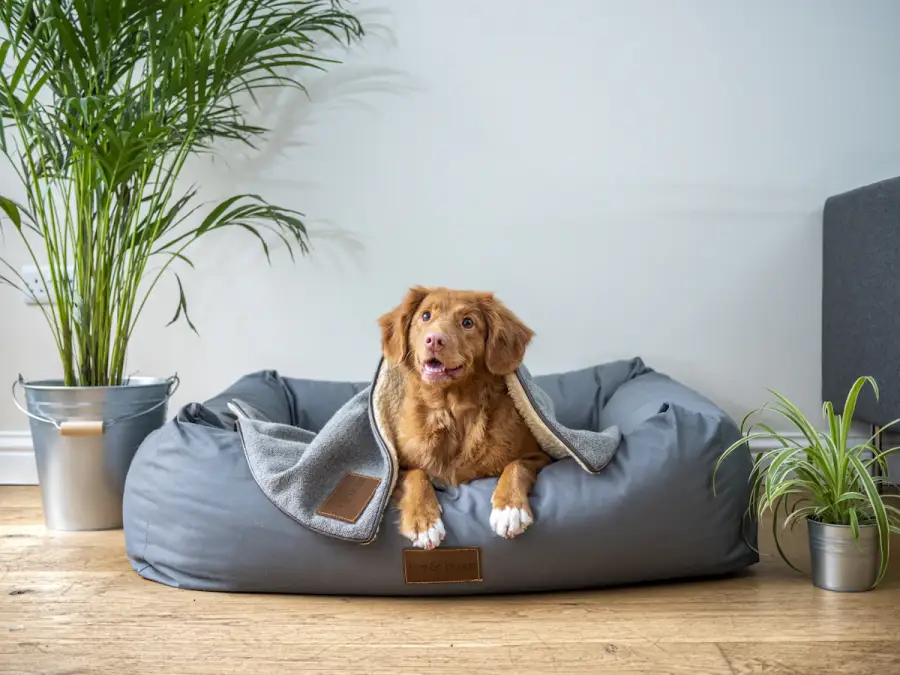
- Put a mat somewhere you spend time. Drop a treat on it whenever your dog happens to be on it. Say nothing.
- Once they start choosing the mat, reward at longer intervals, so being there pays rather than getting there.
- Add mild movement from you: stand up, sit back down, reward if they stay.
- Add a chew on the mat while you work nearby, so settling is paired with something genuinely enjoyable.
- Only then use it near a trigger, at a distance where your dog can still succeed.
Reward-based training is what veterinary behavior organizations recommend for work like this (AVSAB, 2021). You are building a habit rather than suppressing a behavior, which is why it holds up better under pressure.
Jumping up, specifically
Jumping is the overexcitement problem owners ask about most, and it is worth its own method because the usual advice only covers half of it.
Turning away removes the reward, which is attention. On its own that leaves a dog with an urge and no outlet, so most dogs try harder before they give up. Pair it with something to do instead. Ask for four paws on the floor and pay generously, low down, so the reward arrives where you want the dog to be. Delivering the treat at knee height does more than any amount of turning away, because it puts the payment in the right place.
The other half is the arrival itself. Most jumping happens in the first ten seconds at the door, when arousal is at its peak. Put a lead on before you open it, scatter food on the floor as the visitor comes in, and let your dog greet once they are already calm. Visitors who say they do not mind are the reason this takes months rather than weeks.
Mouthing and grabbing
An overexcited dog often uses their mouth, on hands, sleeves or the lead. In puppies this is normal and fades with practice at stopping. In adult dogs it usually means the session has run too long. End play before the mouth comes out rather than after, and give a chew or a scatter feed to bring the arousal down. If mouthing regularly leaves marks or bruising, treat it as a behavior question for a professional rather than a game that got rough.
A two-week plan
| Days | Focus | What good looks like |
|---|---|---|
| 1 to 3 | Mat becomes a good place, plus one sniffing session a day | Dog chooses the mat on their own a few times a day |
| 4 to 7 | Duration on the mat while you move around the room | Two or three minutes of settle with you moving |
| 8 to 11 | Add a chew on the mat, protect a long daytime nap | Dog settles without being asked in the evening |
| 12 to 14 | Practice near one mild trigger at a distance | Dog can eat and respond with the trigger in view |
Sleep and the rest of the day
Overexcitement and exhaustion look almost identical in dogs. A dog who is woken repeatedly, has a busy household, or never gets a long undisturbed stretch will be twitchier by evening. Give them somewhere they will not be stepped over, and let sleeping dogs sleep, including puppies who seem to have an off switch only when nobody is watching.
Swap some of the running for sniffing walks, food puzzles and chewing. These are the activities that actually lower arousal, and they tire dogs in a way that leaves them settled rather than wired.
When it is more than excitement
Talk to your vet if the restlessness is new in an adult dog, if your dog cannot settle even when nothing is happening, if they pace at night, or if the excitement tips into snapping or mouthing that leaves marks. Pain, thyroid problems and, in older dogs, cognitive change can all present as an inability to settle, and behavior changes are worth a medical look first (Merck Veterinary Manual).
If you want a structured program rather than building a plan yourself, our overview of online dog training programs explains what to ask before paying for one.
Brain Training for Dogs
Games and puzzles aimed at focus and impulse control.
Link coming soonK9 Training Institute
Video-led training covering everyday obedience problems.
Link coming soonWe link to programs so you can check current details yourself. We do not publish prices or course contents, because those change.
Frequently asked questions
Is my dog hyperactive?
True hyperactivity is rare. Most dogs described as hyper are under-rested, under-stimulated in the right ways, or have simply been rewarded for bouncing. A vet can rule out the medical possibilities.
Will more exercise calm my dog down?
Up to a point, and then it stops helping. Hard physical exercise raises arousal, and a dog who only ever runs can end up fitter and more wound up. Sniffing, chewing and rest do more for calm.
How much sleep does an adult dog need?
Dogs sleep far more than most owners expect, and puppies and seniors more again. If your dog never gets a long undisturbed stretch during the day, overexcitement is a likely result.
Should I ignore my dog when they jump?
Removing attention helps, but on its own it leaves the dog with nothing to do instead. Pair it with rewarding four paws on the floor, and the new habit arrives much faster.
My dog is only wild in the evening. Why?
Evening zoomies are common and usually normal, especially in young dogs. A predictable wind-down routine, a chew and a quiet space usually take the edge off.
If excitement peaks when the door opens, our guide on how to stop a dog from running out the door shows how to manage the doorway and teach a wait.
Related reading: daily dog exercise ideas, why a dog may suddenly act aggressive and positive reinforcement dog training.
Final thoughts
Calm is a skill you can teach, and it is mostly taught when nothing exciting is happening. Reward the quiet moments, protect the naps, swap some running for sniffing, and use distance rather than volume when your dog is already over the edge. For the behaviors that sit alongside this one, see our dog behavior hub.