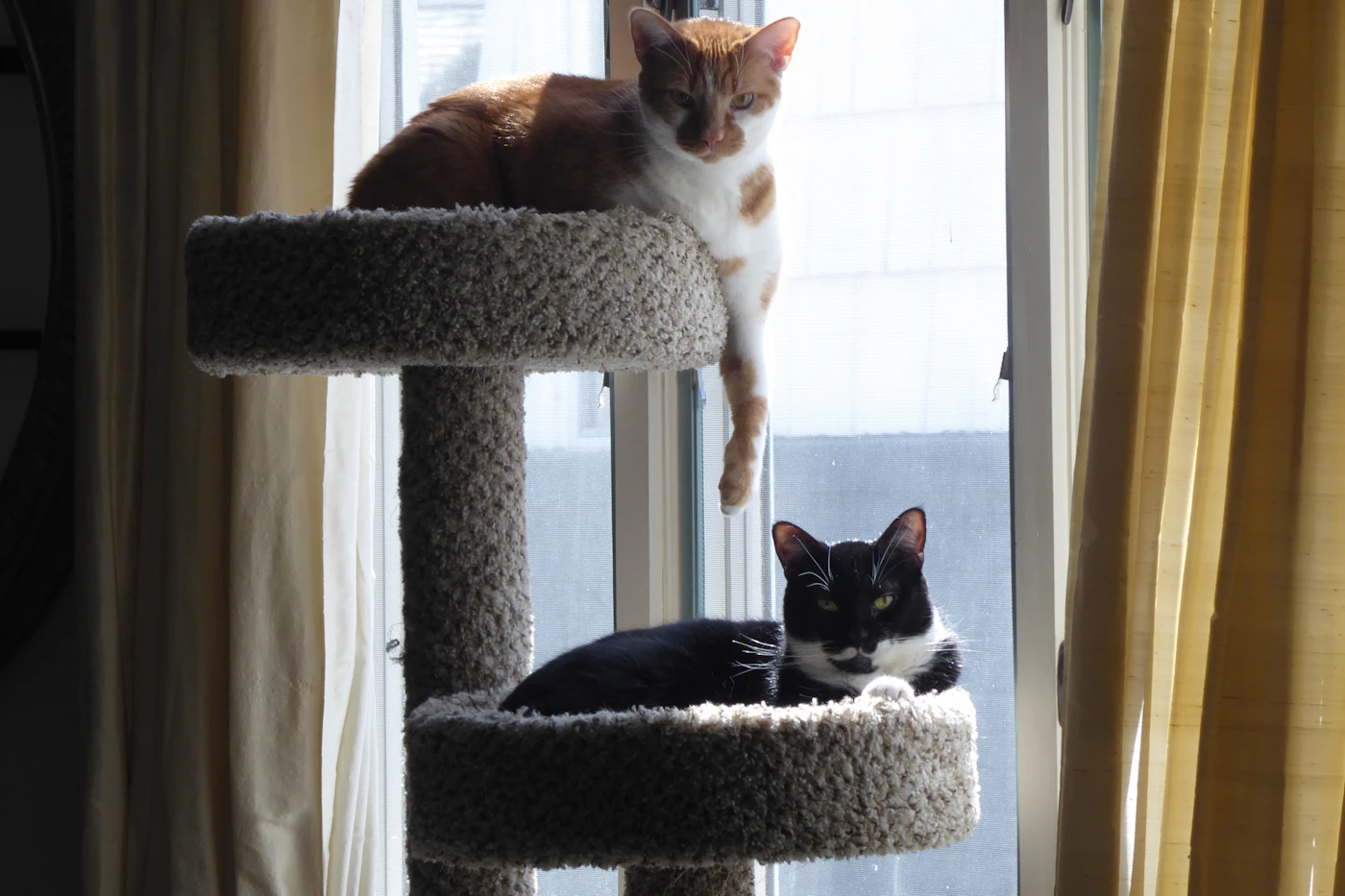
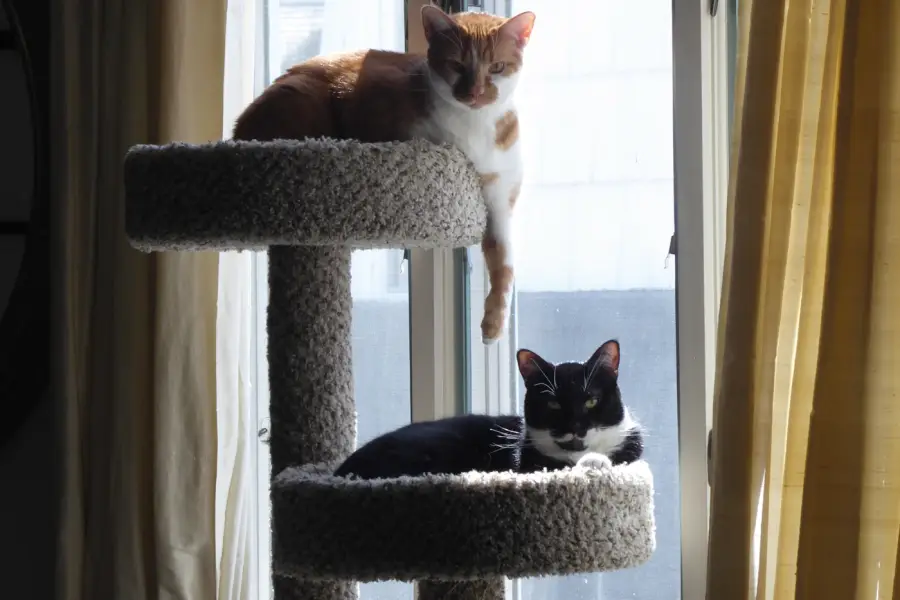
To choose a cat tree for an indoor cat, check stability first, then perch size, scratching surfaces, layout and placement. A tree is not a requirement, but raised places and scratching surfaces are both part of a healthy feline environment, and a well-chosen tree can provide both. This guide explains what to look for, how to fit a tree to your cat’s age and household, and when another option may suit better. PetOwnerHQ has not tested any cat trees, so this guide does not rank or recommend products. You can read how we research our guides on our How We Review page.
Key takeaways
- Check stability first. A tree that wobbles is a poor choice, whatever else it offers.
- Perches should be wide and long enough for your cat to stretch out fully.
- Vertical scratching posts should be sturdy and preferably tall enough for a full stretch. Offer horizontal options too.
- Fit the layout to your cat: low platforms or ramps for kittens and cats with limited mobility, and more than one perch or safe place in multi-cat homes.
- A tree is one option. Wall shelves, window perches and separate scratching posts can do similar jobs.
Guidance from veterinary sources is attributed in the text. Items marked “PetOwnerHQ suggestion” are practical advice, not veterinary guidance.
Do indoor cats need a cat tree?
Not necessarily, but indoor cats do benefit from raised places and scratching surfaces. The 2013 AAFP and ISFM Feline Environmental Needs Guidelines note that access to an elevated area increases a cat’s vertical space and allows it to monitor its environment. The FelineVMA and iCatCare owner resource, Your Cat’s Environmental Needs, says most cats prefer a safe space that is raised off the ground. The AAFP’s scratching resource describes scratching as normal, natural cat behavior. A cat tree can combine height, a resting place and scratching surfaces in one piece of furniture, but shelves, perches and separate scratching posts can do the same job.
How to choose a cat tree
Stability
The AAFP’s scratching resource says vertical scratching options must be sturdy. Stability matters for the whole tree, because a tree that moves when your cat jumps on it may put your cat off using it.
- PetOwnerHQ suggestion: press on each level and on the base to check for wobble before relying on it.
- PetOwnerHQ suggestion: compare the manufacturer’s stated weight rating with your cat’s weight, and follow the manufacturer’s instructions on assembly and any wall anchoring.
Perch size
The 2013 guidelines say perches should be wide and long enough for the cat to stretch out fully. The sources we reviewed do not set a minimum size. PetOwnerHQ suggestion: compare the stated perch dimensions with your cat’s length when stretched out, and allow extra room for a larger cat.
Scratching surfaces
- Offer both vertical and horizontal scratching options. The AAFP scratching resource advises including both.
- Vertical posts should be sturdy and preferably tall enough for the cat to stretch fully.
- Cats differ in the surfaces and textures they prefer, so it can help to try a few.
- Scratching spots should be available in a variety of locations, including near where your cat sleeps.
- PetOwnerHQ suggestion: check whether scratching posts are replaceable, so you do not have to replace the whole tree when they wear out.
Layout for your cat
- Kittens and cats with limited mobility: the 2013 guidelines advise placing perches, boxes and shelves at a low height or reachable by ramps for kittens and older cats with limited mobility. The 2021 AAFP Feline Senior Care Guidelines suggest steps or ramps to reach elevated places for cats with joint disease or reduced mobility. Not every older cat needs these changes.
- Multi-cat homes: the 2013 guidelines advise at least as many safe places as cats, in areas separated from each other, and key resources in multiple locations so cats have separate access. One tree may not give every cat a separate place to retreat, so consider adding shelves or a perch elsewhere in the home.
Materials and cleaning
Cats rely heavily on scent. The 2013 guidelines say cleaners, detergents and other products can disrupt the scent profile a cat associates with its surroundings, and advise avoiding cleaning areas the cat has marked by rubbing its face. PetOwnerHQ suggestion: if the tree needs cleaning, spot-clean it and avoid strongly scented products. Removable covers can make cleaning easier.
Cat tree types: a practical overview
This table is a PetOwnerHQ overview of common formats, not veterinary guidance. What suits your cat depends on its size, age, mobility and your home.
| Type | May suit | Keep in mind |
|---|---|---|
| Compact tower | Small spaces, a single cat | Fewer perches and less variety |
| Multi-level tree | Active cats, homes that want several perches | Needs floor space and a stable base |
| Floor-to-ceiling pole | Adding height without a large footprint | Check ceiling height and the manufacturer’s fitting instructions |
| Wall-mounted shelves | Custom climbing routes and raised resting places | Needs secure installation following the manufacturer’s instructions |
| Window perch | Cats that like to watch outdoors | Make sure it is secure and the window is safe |
Where should you put a cat tree?
- Near a window: the 2013 guidelines advise that indoor resting areas include a spot that gives the cat a view of the outdoors. PetOwnerHQ suggestion: if outdoor animals seem to stress your cat, consider blocking part of the view.
- Keep windows safe: the Animal Medical Center of New York recommends keeping window screens tightly in place. See our pet safety at home checklist for windows and balconies.
- Near where your cat sleeps: the AAFP scratching resource suggests placing scratching surfaces there.
- Away from litter and food: the 2013 guidelines advise keeping key resources separate, including toileting areas from other resources.
How do you get a cat to use a new tree?
The 2013 guidelines advise against forcing interaction with a cat, and suggest rewarding the cat with a treat after play. PetOwnerHQ suggestions: never force your cat onto the tree, place the tree where your cat already spends time, play with a toy around it, and be patient while your cat decides whether to use it.
When a cat tree may not be the right fit
- Limited mobility: low platforms, ramps or ground-level resting places may suit better than a tall tree.
- Small spaces: wall shelves or a window perch can add height without much floor space.
- A cat that avoids heights: a cardboard box, carrier or other safe place can still meet the need for a retreat. The owner resource lists these as examples.
- A change in behavior: if your cat stops jumping or climbing where it used to, talk to your veterinarian, because behavior changes can have environmental, social or medical causes.
Questions to ask before you buy
- What weight does the manufacturer say the tree supports, and does that suit my cat?
- Is the base stable, and do the instructions mention anchoring?
- Are the perches wide and long enough for my cat to stretch out?
- Are vertical posts sturdy, and tall enough for my cat to stretch?
- Does the tree offer both vertical and horizontal scratching surfaces?
- Are scratching posts replaceable?
- Does it include small parts, bells or string that could be swallowed? The 2013 guidelines advise avoiding toys with small ingestible parts and bells, or removing them before unsupervised play.
- Can the covers be removed or spot-cleaned?
- Will it fit the room, and can my cat reach every level comfortably?
Frequently asked questions
How tall should a cat tree be?
No veterinary source we reviewed sets a recommended height. What matters is that your cat can reach each level comfortably, perches are wide and long enough to stretch out on, and vertical posts are sturdy and preferably tall enough for a full stretch. Choose based on your cat’s size, age and mobility.
Do indoor cats need a cat tree?
Not necessarily. Veterinary guidelines describe elevated areas as a way to add vertical space and let cats monitor their surroundings, and scratching as normal cat behavior. A tree can provide both, but wall shelves, window perches and separate scratching posts can too.
How do I get my cat to use a new cat tree?
Let your cat choose and never force it onto the tree. Practical steps are to place the tree where your cat already spends time, reward appropriate play with a treat and be patient. If your cat avoids it, try lower platforms or another type of perch.
Is one cat tree enough for several cats?
Often not. The 2013 guidelines advise at least as many safe places as cats, in areas separated from each other, and key resources in multiple locations so cats have separate access. Consider adding shelves or another perch elsewhere in the home.
Where should I put a cat tree?
Near a window can give your cat something to watch, and scratching surfaces can go near where your cat sleeps. Keep the tree away from the litter box and feeding areas, and block the view if outdoor animals cause stress.
Final thoughts
A good cat tree is stable, fits your cat’s size and abilities, and offers scratching surfaces and places to rest and watch. It is one way to meet a cat’s need for height and scratching, not the only way. For more ideas on meeting your cat’s needs, see our indoor cat enrichment guide, and browse our cat care guides and buying guides.
Sources
- AAFP and ISFM Feline Environmental Needs Guidelines (2013)
- FelineVMA and iCatCare: Your Cat’s Environmental Needs, Practical Tips for Cat Caregivers
- AAFP Claw Friendly Educational Toolkit: Scratching Resources
- 2021 AAFP Feline Senior Care Guidelines
- Animal Medical Center of New York: High Rise Syndrome in Cats