
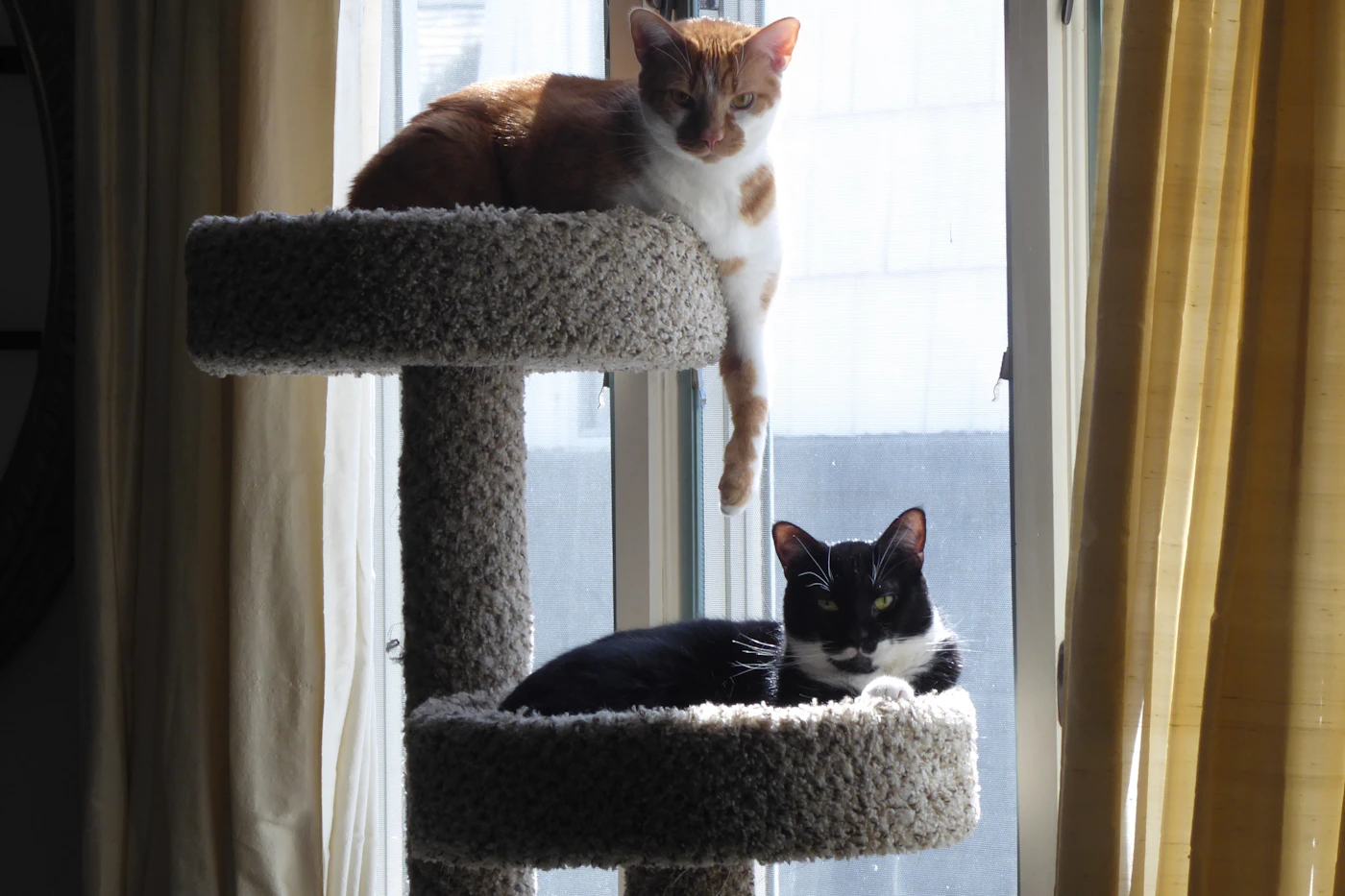
A good cat tree gives an indoor cat places to climb, scratch, hide and watch the world from above. For many cats it quickly becomes a favorite spot in the home. This guide explains what makes a cat tree safe and genuinely useful, and how to pick one that suits your cat and your space.
Quick guide
- Stability first: a wide, heavy base prevents wobbling.
- Scratching posts wrapped in sisal rope are popular with many cats.
- Perches and hideaways should be big enough for your cat to stretch out.
Our picks
Product picks coming soon. We will add specific cat trees once we have verified their dimensions, materials and assembly notes. In the meantime, the checklist below will help you compare options.
Why indoor cats benefit from a cat tree
Climbing and perching are natural cat behaviors. Height helps many cats feel secure, and a dedicated scratching surface gives them an alternative to your furniture. A tree near a window can also provide hours of bird watching.
What to look for
Stability
Give the tree a gentle push in the store or check the base dimensions online. Taller trees need wider, heavier bases. Some can be anchored to a wall for extra security, which is worth doing in homes with large or energetic cats.
Scratching surfaces
Look for tall posts wrapped in sisal rope or sisal fabric so your cat can stretch fully while scratching. Replaceable posts extend the life of the tree.
Platform size
Perches and beds should be large enough for your cat to lie down comfortably. Larger breeds may need extra-wide platforms and sturdier construction.
Height and layout
Taller trees suit confident climbers, while kittens and senior cats may prefer shorter trees with platforms close together. Multi-cat homes benefit from several perches at different heights.
Cat tree types compared
| Type | Good for | Keep in mind |
|---|---|---|
| Compact tower | Small spaces, single cats | Fewer perches |
| Multi-level tree | Active cats, multi-cat homes | Needs floor space and a solid base |
| Floor-to-ceiling | Maximum height in a small footprint | Check ceiling height and tension fit |
| Wall-mounted shelves | Custom climbing routes | Requires secure installation |
Where to place a cat tree
Near a window is usually a winner. Placing it in a room where the family spends time also helps, since many cats like to be near their people while still having a high vantage point.
Frequently asked questions
How do I get my cat to use a new cat tree?
Place it somewhere your cat already likes to spend time, add a few treats or catnip on the platforms and play with a wand toy around it.
How tall should a cat tree be?
It depends on your cat’s age, confidence and your space. Many adult cats enjoy trees that reach at least window height.
How do I keep a cat tree clean?
Vacuum carpeted surfaces regularly and spot-clean with pet-safe products. Removable cushions make cleaning easier.
Final thoughts
Choose stability first, then match height, platform size and scratching surfaces to your cat. A well-chosen cat tree can make indoor life more interesting for years. Pair it with ideas from our indoor cat enrichment guide.