Teaching tricks is a good way to give your dog mental exercise and strengthen your bond, and most tricks are built from a few simple ideas: reward the right moment, break the behavior into small steps, and practice in short, happy sessions. This guide walks through three popular tricks, shake, spin and roll over, using methods described by the American Kennel Club (AKC), plus the training basics that make every trick easier. It is general information, and if your dog has pain or a health condition, check with your veterinarian before teaching physical tricks.
Key takeaways
- Mark the exact moment your dog gets it right, then reward right away. A clicker or a short word like “yes” works as a marker.
- Break each trick into small steps and move on only when your dog can do the current one.
- Keep sessions short and end on a success.
- Add the verbal cue once your dog reliably does the behavior, not before.
- Practice in new places, with distractions added gradually.
What do you need before you start?
- Small, tasty treats. The AKC suggests using high-value treats and small pieces, so your dog stays motivated without being overfed.
- A marker. A clicker or a marker word tells your dog the exact moment they did the right thing. Treats follow the marker.
- A calm, quiet spot. Start at home, where it is easy for your dog to focus.
If your dog is new to training, start with the basics in our step-by-step dog training guide and, for young dogs, our puppy training guide.
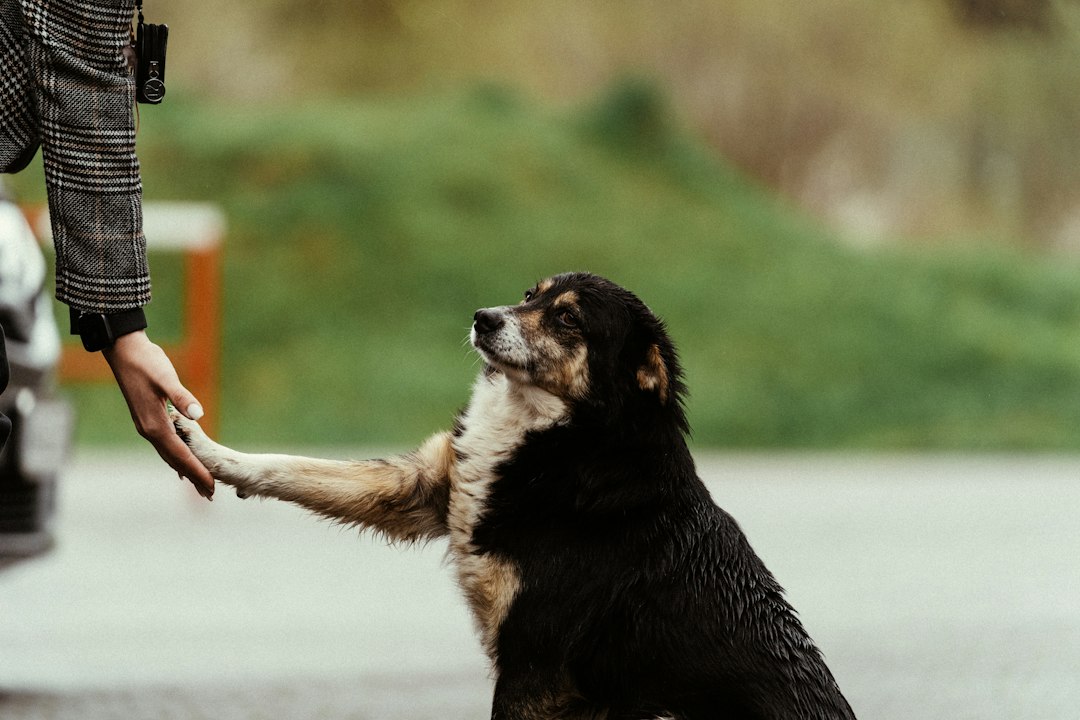
How do you teach a dog to shake hands?
The AKC teaches “shake” in stages, letting your dog offer the paw rather than lifting it for them:
- Offer your hand. Hold out your hand and stay quiet. When your dog paws at it, mark the moment, open your hand, praise and give a treat.
- Wait for a slightly longer touch. Once your dog paws at your hand reliably, reward only a slightly longer touch.
- Build duration. Reward when the paw rests on your hand, not just when it taps.
- Shorten the hold. Ask for a brief touch, so your dog learns that placing the paw on your hand earns the treat.
- Add the cue. When your dog does this reliably, say your cue, commonly “shake,” just before the paw makes contact, then reward.
- Turn your hand sideways. Hold it out flat, give the cue, and reward when the paw meets your hand.
- Add gentle movement. When your dog can reach a steady hand, move it slowly up and down, rewarding as you go. If your dog gets unsure, go back to the last step they handled well.
The AKC notes that dogs do not automatically carry a trick from one paw to the other, so teach each paw separately. If your dog offers the wrong paw, do not correct it. Wait quietly and reward the one you want.
How do you teach a dog to spin?
The AKC describes a simple lure method:
- Get your dog’s attention with a treat.
- Hold the treat above your dog’s nose and slowly guide it in a large circle over the head so your dog follows it.
- Keep moving your hand in a full circle. When your dog completes the circle, praise and give the treat. Repeat a few times.
- When your dog reliably follows your hand all the way around, add a cue such as “spin around.”
- Once your dog can do one full spin, ask for two or three spins before rewarding.
- After several successes, use only the hand motion without showing the treat, so your dog does not depend on seeing it.
How do you teach a dog to roll over?
The AKC says your dog should already know the “down” cue before you start roll over. The steps:
- Ask your dog to lie down in front of you.
- Kneel beside your dog and hold a small treat near the nose, off to one side of the head.
- Slowly move your hand from the nose toward the shoulder so your dog follows the treat and rolls onto one side. Reward each time your dog lies flat with the head on the floor.
- Move your hand from the shoulder toward the backbone to bring your dog onto the back.
- Keep guiding the treat in the same direction so your dog rolls over to the other side.
- When your dog reliably follows the treat through the full roll, add the cue “roll over.”
- Gradually reduce the hand motion and the treat lure until your dog responds to the cue alone.
The AKC advises rewarding each stage rather than waiting for the full roll. The AKC page does not discuss comfort or health, so use common sense: do not force the roll, watch for stiffness or reluctance, and check with your vet first if your dog has joint or back problems.
What is shaping, and why does it help?
According to the AKC, shaping means teaching a complex behavior by breaking it into small steps and rewarding each step on the way to the final behavior, instead of physically guiding the dog through the whole action. A roll over, for example, can be built by rewarding a down, then a roll onto one hip, and so on. The AKC suggests these habits:
- Plan the steps in advance and adjust if your dog gets stuck.
- Reward only the current step. Once your dog does it consistently, raise the bar and stop rewarding the earlier step.
- Watch for small variations in posture or movement, because they are the building blocks for the next step.
- Do not rush or stall. Moving on too quickly frustrates a dog, while staying on one step too long can make your dog think that step is the goal.
How long should training sessions be?
The AKC advises keeping sessions short and ending on a positive note. It does not set an exact length, so watch your dog: stop while your dog is still interested, and finish with something your dog can do well.
How do you make a trick reliable?
- Practice in new places. The AKC notes that training at home is easier than with distractions, so add new locations and distractions gradually and keep rewards frequent so your dog stays successful.
- Fade the lure. Once your dog knows the motion, use the hand signal without a treat in view, then reward afterward.
- Go back a step when needed. If your dog struggles, return to the last step your dog handled well.
For more ideas on keeping your dog’s mind busy, see our dog behavior guides.
Frequently asked questions
What is the easiest trick to teach a dog?
It depends on your dog, but shake and spin both use simple lure or wait-and-reward steps, as described by the AKC. Roll over is a little more advanced, because your dog should already know the down cue.
Should I add the cue word first or last?
Last. The AKC advises adding the verbal cue once your dog reliably does the behavior, and saying it just before the behavior happens.
What are the best treats for training tricks?
The AKC suggests high-value treats in small pieces. Small treats keep your dog focused and help avoid overfeeding.
Do I need a clicker?
No. The AKC says a clicker can serve as the marker, but a short marker word works too. What matters is marking the exact moment your dog gets it right.
Can puppies learn tricks?
Yes, and tricks are a fun way to practice focus. Keep sessions very short, and see our puppy training guide for the basics.
Final thoughts
Tricks work best when you stay patient, reward the right moment, and build each behavior one small step at a time. Start with shake or spin, move on to roll over once your dog knows down, and keep every session short and positive. For more training help, see our dog training guide.