Some dogs treat the bathroom door as a personal insult. If yours moves rooms when you do, waits outside the shower and reassembles at your feet the moment you sit down, you have what owners often call a velcro dog. In most cases this is normal, social behavior. Occasionally it is a sign of something that needs attention, and it helps to know the difference.
Key takeaways
- Following is usually normal: dogs are social animals who track the person who runs their day.
- You probably taught some of it: attention, food and doors all happen near you.
- Watch what happens when you leave: distress when alone is a different problem from company when together.
- Independence can be trained: reward settling away from you, deliberately and often.
The short answer
Dogs follow the person who predicts good things. You control the food, the door, the lead and the attention, so being near you is the single most reliable strategy your dog has. On top of that, dogs are a social species that evolved alongside people, and staying close to the group is the default setting rather than the exception.
Six common reasons
1. Social bonding
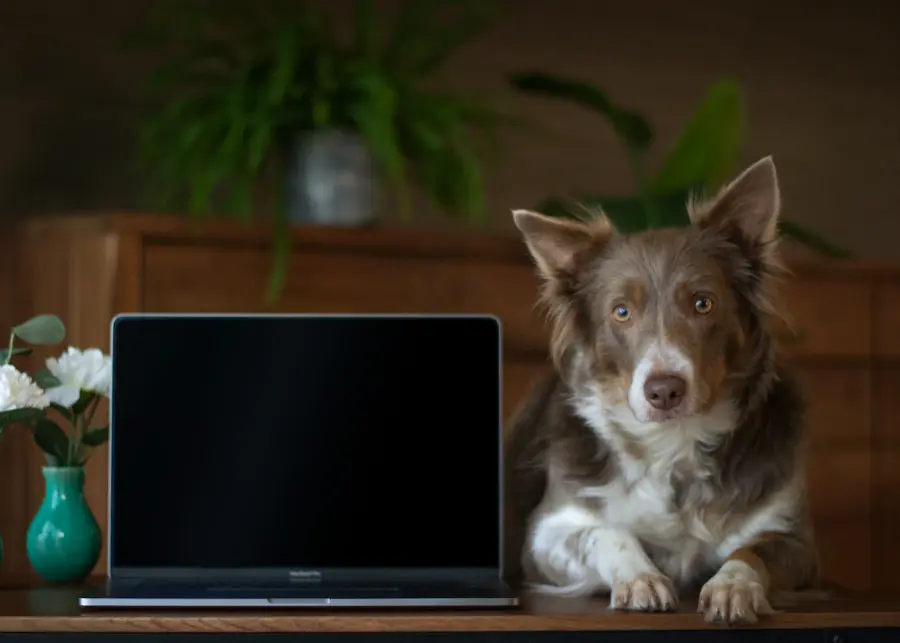
Company is its own reward. Many dogs simply prefer to be in the same room as their people, in the same way that they choose to sleep in a pile rather than alone.
2. A history of reinforcement
If following you has previously produced a dropped piece of food, a walk, a scratch behind the ear or a door being opened, it has been reinforced hundreds of times. Nothing unusual is going on, the behavior is just working.
3. Routine and cues
Dogs are excellent at spotting patterns. Picking up keys, closing a laptop, putting on particular shoes or going to a certain cupboard all predict something. Your dog is not shadowing you so much as reading the schedule.
4. Breed tendencies
Dogs bred to work in close contact with a handler often stay physically closer by default. That is a tendency rather than a rule, and individual temperament varies widely within any breed. Our breed guides cover how breed type affects everyday care.
5. Boredom
A dog with nothing to do will go and find the most interesting thing in the house, which is usually you. Under-stimulated dogs often look clingy when the real issue is an empty day. Sniffing games, chews and short training sessions change this quickly.
6. Change, discomfort or age
New homes, new people, building work, illness, reduced hearing or vision and age-related cognitive change can all make a dog stick closer than usual. A sudden shift in an adult dog is the one pattern worth acting on rather than watching.
Velcro dog or separation anxiety?
The distinction is about what happens when you are not there, not about how close your dog sits when you are.

| Sign | Clingy but fine | Worth investigating |
|---|---|---|
| When you leave the room | Follows, or settles after a moment | Whines, paces or scratches at the door |
| When alone in the house | Sleeps most of the time | Barks, howls, destroys or has accidents |
| Body language | Relaxed, loose | Panting, drooling, restlessness before you go |
| As you prepare to leave | Mild interest | Visible distress at keys, shoes or a coat |
The ASPCA makes the same distinction: the behaviors that point to separation anxiety are the ones that happen specifically when a dog is alone, not when you are in the room (ASPCA on separation anxiety). If the right-hand column sounds familiar, a set-up camera for twenty minutes will tell you more than any amount of guessing. Our guide to dog separation anxiety signs and training explains what to look for, how gradual training works and when to involve a professional, and our separation anxiety page covers the services owners consider.
When following becomes a problem
Following is worth addressing if your dog cannot settle anywhere except against you, trips you on the stairs, cannot be left with anyone else, or shows the distress signs above. It is also worth addressing if it has appeared suddenly in a dog who used to be relaxed.
How to build a little independence
- Give them a place worth being. A comfortable bed in the room you use most, with something to chew, makes settling easy to choose.
- Reward being there. Drop a treat on the bed occasionally while your dog is on it and saying nothing. Do not call them to it.
- Practice tiny absences. Step out of the room for two seconds and come back before your dog moves. Build from there in seconds, not minutes.
- Fill the day. Sniffing walks, food puzzles and two short training sessions take the edge off a dog who is following you out of boredom.
- Keep departures boring. Long goodbyes make leaving feel significant.
None of this is about pushing a dog away. It is about making a second good option available, so being near you is a preference rather than the only thing that works.
The dominance myth
You will still find advice online claiming that a dog who follows you, walks through doorways first or leans on your leg is trying to take charge of the household. That idea rests on a wolf-pack model, and AVSAB’s position is that the best model for understanding domestic dogs is domestic dogs, not wolves, and that most unwanted behavior comes from what has been accidentally rewarded rather than from a bid for rank (AVSAB position statement on dominance theory).
The practical problem with the myth is what it leads people to do. Pushing a dog away, blocking doorways or staging confrontations does nothing for a dog who is following you out of habit or boredom, and it can make a worried dog more worried. Treating the behavior as ordinary social company, and giving the dog something better to do, is both kinder and more effective.
What changes as dogs get older
Clinginess that appears later in life often has a physical explanation. Dogs who are losing their hearing frequently stay closer, because sight becomes the main way they keep track of you. Dogs with reduced vision may shadow a familiar person in unfamiliar rooms. Stiff joints can make a dog reluctant to settle far from where the action is, and age-related cognitive change can bring restlessness and night-time pacing.
The ASPCA lists becoming overdependent and clingy among the changes that can come with cognitive dysfunction in older dogs (ASPCA on behavior problems in older dogs), and AAHA’s senior care guidance stresses that recognising it early matters because treatment works better in the earlier stages (AAHA, 2023). None of these are things to accept as simply getting old. Pain relief, routine adjustments, better lighting and a predictable layout can all make a real difference, and they need a veterinary conversation rather than a training plan. Our guide to senior dog care covers what usually changes and what tends to help.
A simple week of practice
| Day | What to do | Why |
|---|---|---|
| Every day | Two short sniffing or training sessions | Takes the edge off a dog who follows out of boredom |
| Days 1 to 3 | Drop a treat on the bed while your dog is already on it | Makes settling away from you worth choosing |
| Days 4 to 5 | Step out of the room for two to five seconds, return calmly | Builds absences that are too short to worry about |
| Days 6 to 7 | Give a chew in the bed while you work nearby | Pairs being apart with something enjoyable |
When to talk to a vet or behaviorist
Book a veterinary check if the clinginess is new, if your dog seems restless at night, if they have become slower or stiffer, or if they show distress when left. Pain, sensory loss and cognitive change are all treatable or manageable, and all of them can look like neediness. For behavior that continues after a clean bill of health, a credentialed behaviorist is the next step, as covered in our dog behavior hub.
Frequently asked questions
Is it bad that my dog follows me everywhere?
Usually not. It becomes a concern only when your dog cannot cope at all with being apart, or when the following comes with pacing, drooling, destruction or accidents.
Which dogs are most likely to be clingy?
Breeds developed to work closely with people often stay near their owners, and so do dogs who spend most of the day with someone at home. Individual personality matters as much as breed.
My dog started following me recently. Why?
A sudden change is worth paying attention to. House moves, a new baby, a change in schedule, hearing or sight loss and pain can all cause it. Speak to your vet if nothing obvious has changed.
Should I ignore my dog when they follow me?
No need. Just avoid rewarding it every single time with attention, and deliberately reward settling somewhere of their own as well.
Does crate training help?
It can, if the crate is introduced as a good place rather than a way to shut the dog away. Forcing separation without preparation tends to make anxiety worse.
Related reading: positive reinforcement dog training and daily dog exercise ideas.
Final thoughts
A dog who follows you around is usually telling you that you are the most interesting and useful thing in the house, which is a compliment rather than a problem. Give them somewhere good to settle, reward them for using it, and keep an eye on how they cope alone. If being left is the hard part, start with our guide to separation anxiety.