A steady feeding routine helps your dog know what to expect, supports healthy digestion and makes it easier to manage weight. This guide covers how to set mealtimes, measure portions, handle treats and store food safely. It is general information; your veterinarian is the best source of advice on your dog’s specific diet.
Key takeaways
- Consistent times help digestion and toilet routines.
- Measure portions rather than estimating.
- Count treats as part of the daily total.
Choose a complete and balanced food
Look for food labeled as complete and balanced for your dog’s life stage, such as puppy, adult or senior. Size-specific formulas can also help with kibble size. If you are unsure which food suits your dog, ask your vet.
Set regular mealtimes
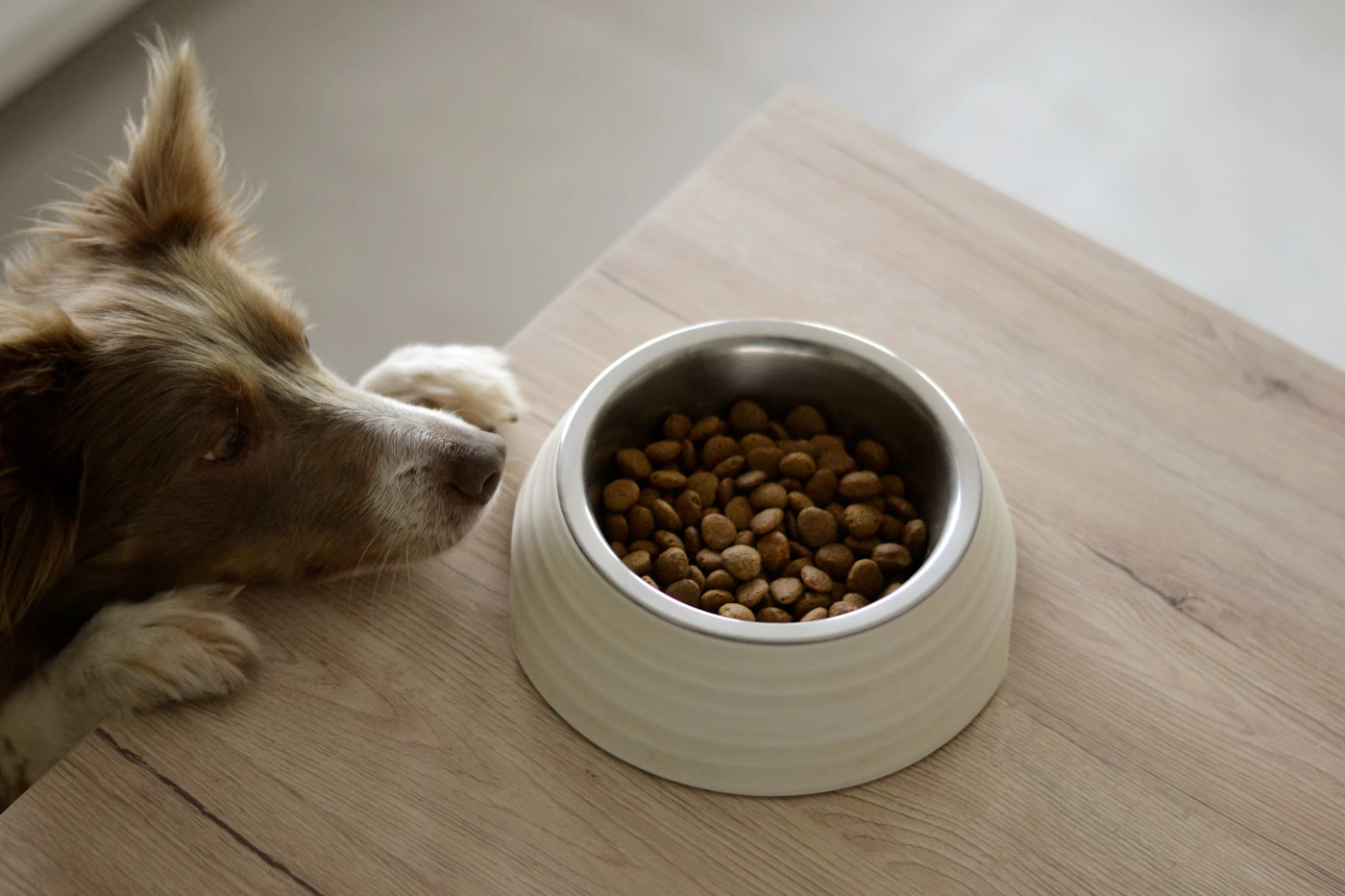
Many adult dogs eat two meals a day, while puppies often need more frequent, smaller meals. Pick times that fit your household and keep them consistent, including on weekends.
Measure portions accurately
Use the feeding guide on the package as a starting point, then adjust based on your dog’s body condition and your vet’s advice. A kitchen scale is more accurate than a scoop, especially for small dogs where small differences matter.
Handle treats wisely
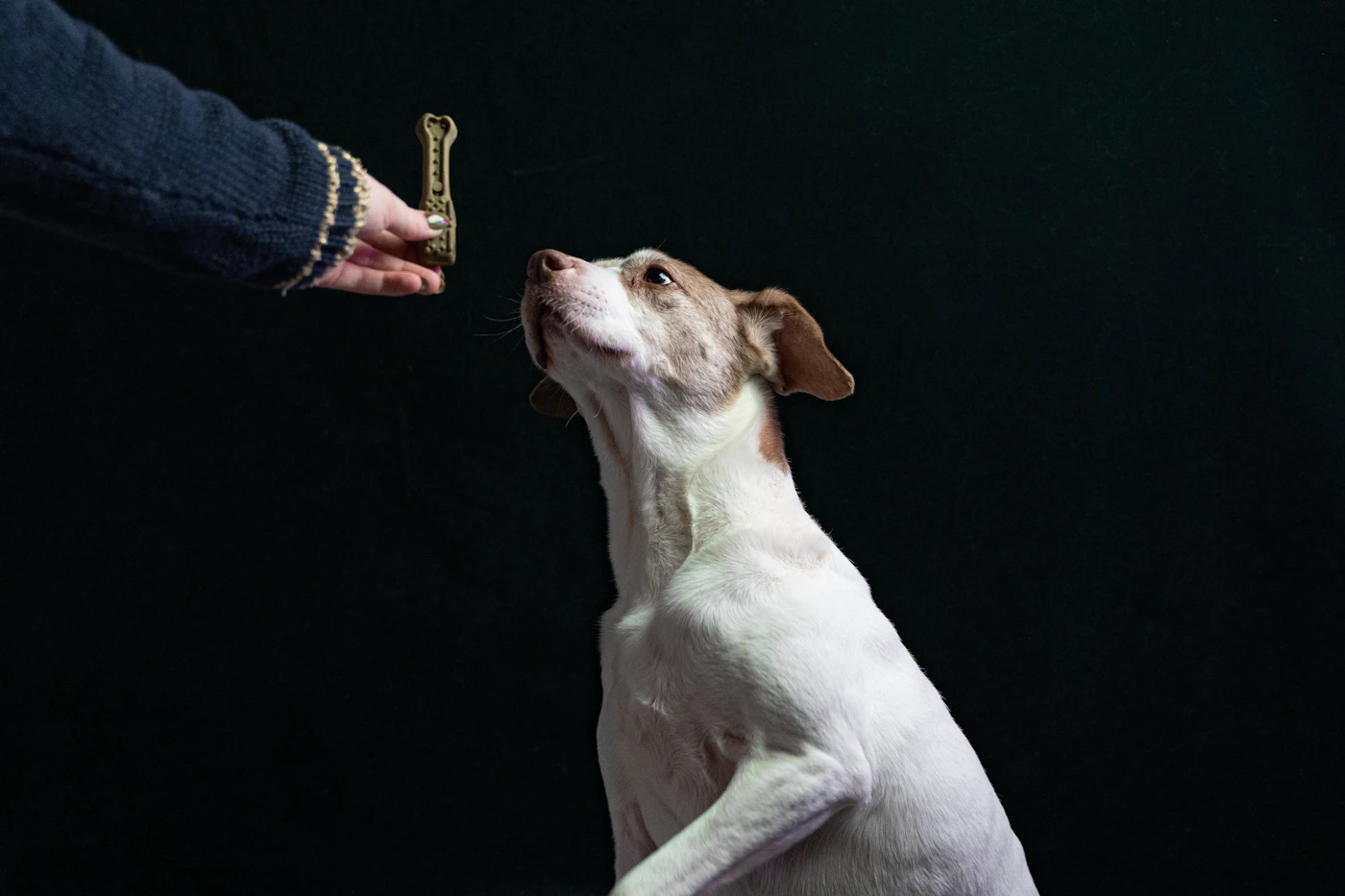
Treats are useful for training and bonding, but they add up. Choose small treats, break larger ones into pieces and reduce meal portions slightly on heavy training days.
Keep water fresh
Clean water should always be available. Wash bowls daily and refill often, especially in warm weather or after exercise.
Store food safely
- Keep dry food in its original bag inside an airtight container so you keep the batch information.
- Store food somewhere cool and dry.
- Refrigerate opened wet food and follow the label on how long it keeps.
For bowls, mats and storage, see our guide to pet food accessories.
Switching foods
Change foods gradually over several days by mixing increasing amounts of the new food with the old. This gives your dog’s digestion time to adjust.
Foods to keep away from dogs
Some common human foods can be harmful to dogs, including chocolate, grapes and raisins, onions and garlic, and products containing xylitol. Keep these out of reach and contact your vet or an animal poison helpline immediately if your dog eats something concerning.
Frequently asked questions
Should I leave food out all day?
Many owners prefer set meals because they make it easier to monitor appetite and portions. Your vet can advise what suits your dog.
How do I know if my dog is a healthy weight?
Your vet can assess body condition. As a general check, you should be able to feel the ribs without pressing hard.
Is it okay to give my dog table scraps?
It is best to avoid them. Some foods are unsafe, and scraps can add extra calories and encourage begging.
Final thoughts
Consistent mealtimes, measured portions and sensible treats form the foundation of a healthy feeding routine. Review your approach with your vet at checkups, as needs change with age and activity.