Positive reinforcement training rewards the behavior you want to see, so your dog is more likely to repeat it. It builds trust, keeps training enjoyable and works for puppies and adult dogs alike. This guide covers the core principles and a simple plan for teaching your first cues.
Key takeaways
- Reward quickly: timing helps your dog connect the reward with the action.
- Keep sessions short: a few minutes, a few times a day.
- Set your dog up to succeed: start easy and build gradually.
How positive reinforcement works
When a behavior is followed by something your dog values, such as a treat, praise or play, that behavior becomes more likely. Instead of punishing mistakes, you manage the environment to prevent them and reward the choices you like.
What you need
- Small, soft treats your dog loves
- A treat pouch or pocket for quick access
- A quiet space with few distractions to start
- Optional: a clicker or a consistent marker word such as “yes”
Teach your first cues
Sit
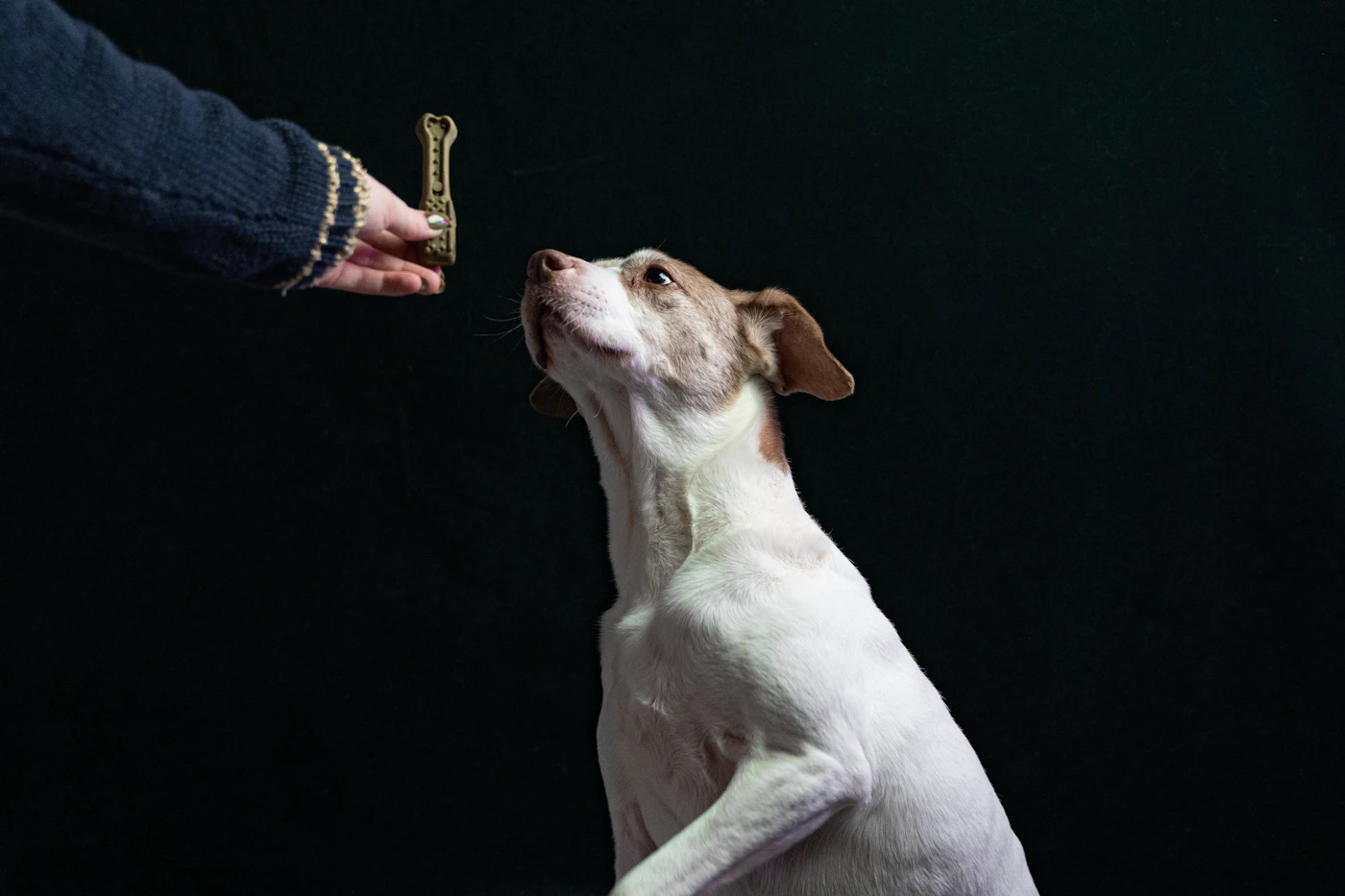
Hold a treat near your dog’s nose and slowly move it up and back. As their bottom touches the floor, mark with “yes” and reward. Add the word “sit” once your dog is doing it reliably.
Down
From a sit, lower a treat slowly to the floor between the front paws. Mark and reward when elbows touch the ground.
Come
Say your dog’s name and “come” in a happy voice, step backwards and reward generously when they reach you. Practice indoors first, then in safe, enclosed spaces.
Loose-leash walking
Reward your dog for walking beside you. If they pull, stop and wait until the leash is loose, then continue. Consistency is everything here.
Training plan for the first two weeks
| Days | Focus |
|---|---|
| 1 to 3 | Marker word, name response, sit |
| 4 to 7 | Down, short stays, come indoors |
| 8 to 14 | Loose-leash walking, practice cues in new places |
Common mistakes to avoid
- Repeating a cue many times. Say it once, then help your dog succeed.
- Moving too fast. Add distance, duration and distractions one at a time.
- Training when your dog is overtired or overexcited.
When to get extra help
If your dog shows fear, aggression or severe anxiety, speak with your veterinarian and consider a qualified trainer or behavior professional who uses reward-based methods.
Frequently asked questions
Will my dog only obey when I have treats?
As behaviors become reliable, you can gradually vary rewards and mix in praise, play and everyday rewards like going outside.
How old should a puppy be to start training?
Gentle, short training can start as soon as your puppy comes home, focusing on simple cues and positive experiences.
How long should a training session be?
For most dogs, a few minutes at a time works well. End while your dog is still engaged.
Final thoughts
Positive reinforcement is simple, kind and effective. Keep sessions short, reward generously and celebrate small wins. You will build good manners and a stronger bond at the same time.