Regular brushing and the occasional bath keep your dog’s coat clean, reduce shedding and give you a chance to check their skin. Done calmly, grooming can become a relaxed routine rather than a battle. This guide walks through the basics step by step.
Key takeaways
- Brush before bathing to remove tangles and loose hair.
- Use lukewarm water and a dog-specific shampoo.
- Keep it positive with treats, praise and short sessions.
How often to brush and bathe
Brushing frequency depends on coat type. Long and double coats often need brushing several times a week, while short coats may need it weekly. Most dogs only need a bath occasionally, or when they get dirty. Bathing too often can dry out the skin, so ask your vet if you are unsure.
Brushing step by step
- Choose a brush suited to your dog’s coat. Our guide to dog grooming tools can help.
- Start with areas your dog enjoys, such as the back and shoulders.
- Brush in the direction of hair growth, working in small sections.
- Use a comb to check for tangles behind the ears, under the legs and around the tail.
- Reward calm behavior throughout.
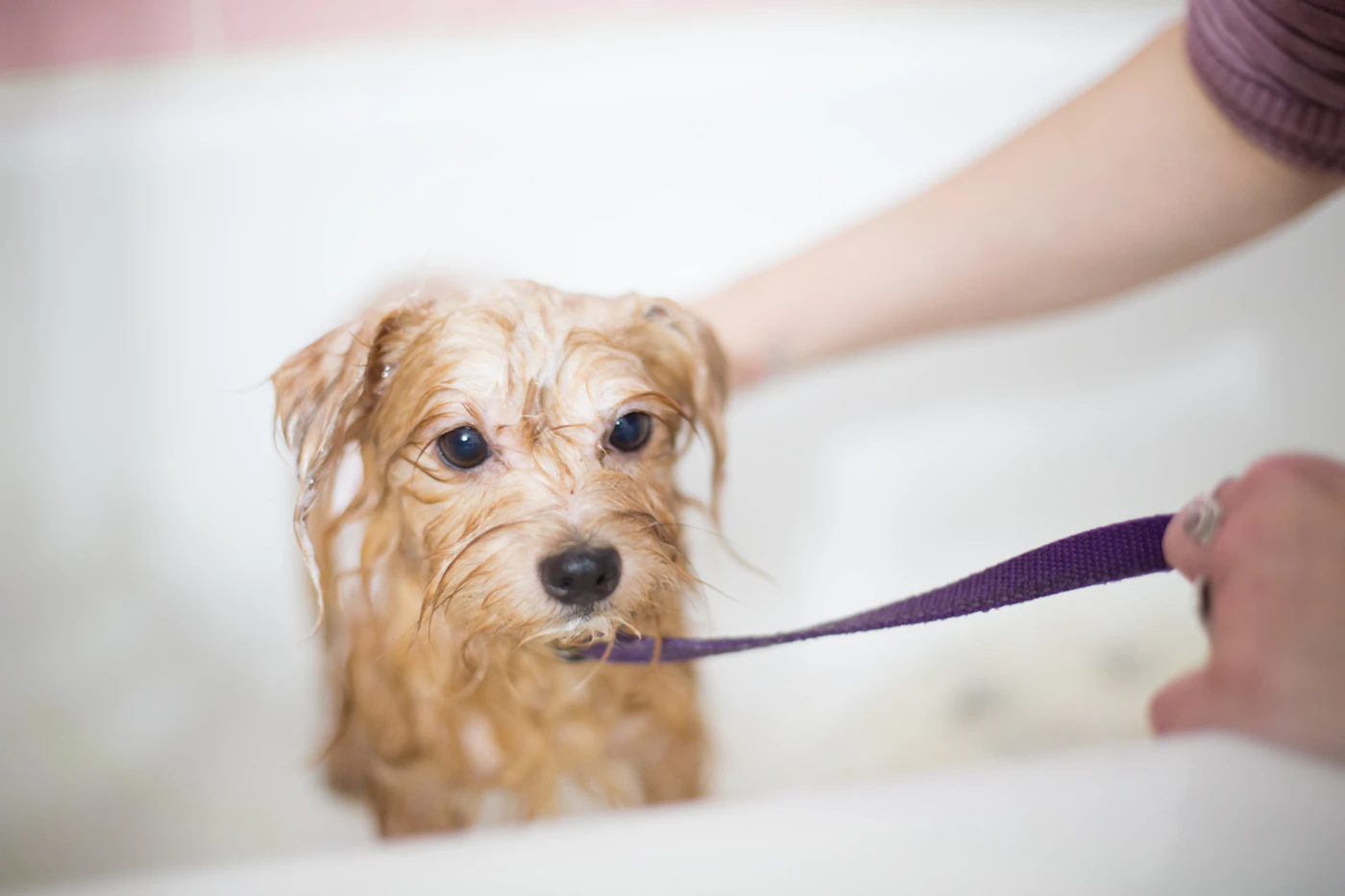
Bathing step by step
- Gather everything first: shampoo, towels, a non-slip mat and treats.
- Brush out tangles before getting the coat wet.
- Use lukewarm water and wet the coat thoroughly, avoiding the eyes and ears.
- Lather with a dog-specific shampoo, then rinse very thoroughly, as leftover shampoo can irritate skin.
- Towel dry, and use a dryer only on a low, cool setting if your dog tolerates it.
Nail, ear and teeth care
Check nails regularly and trim small amounts at a time, avoiding the quick. Clean ears only as needed using a vet-recommended solution, and never insert anything deep into the ear canal. Tooth brushing with a dog toothpaste supports oral hygiene; ask your vet for guidance.
Making grooming a positive experience
- Introduce tools slowly and let your dog sniff them.
- Keep early sessions very short.
- Pair handling with treats and praise.
- Stop before your dog becomes stressed.
When to see a professional
For heavy matting, difficult nail trims or breeds with complex coats, a professional groomer can help. Contact your vet if you notice skin redness, lumps, sores or persistent scratching.
Frequently asked questions
Can I bathe my dog with dish soap?
It is better to use a shampoo made for dogs, which is formulated for their skin.
My dog hates baths. What can I do?
Try a non-slip mat, lukewarm water, a calm voice and lots of treats. Short, positive sessions help over time.
How can I reduce shedding?
Regular brushing with the right tool removes loose hair before it lands on your floor. Diet and health can also play a role, so ask your vet about sudden changes.
Final thoughts
Good grooming is about consistency more than perfection. A few minutes of brushing each week and calm, occasional baths keep your dog comfortable and help you spot problems early.